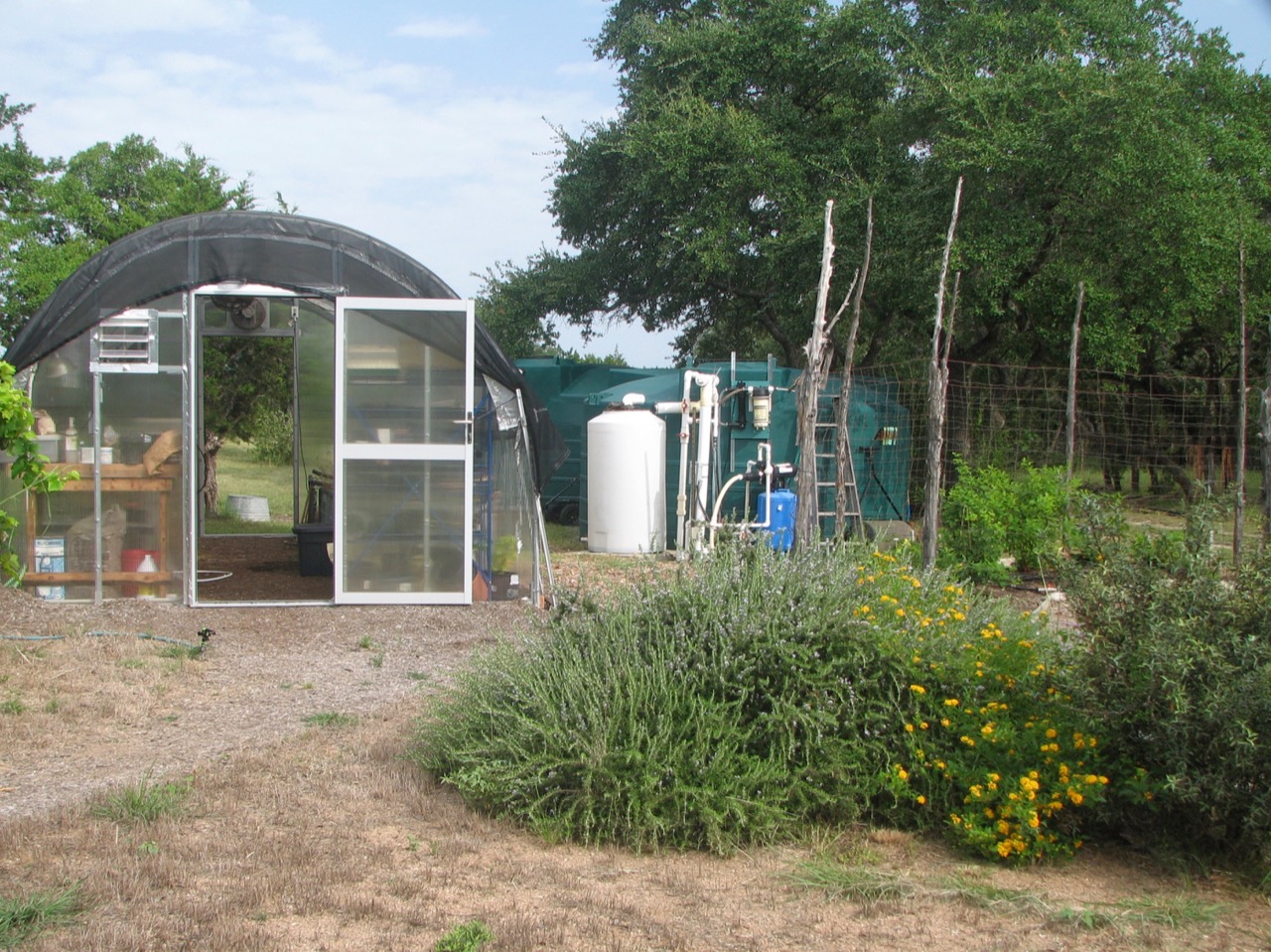
Solar Power System Sizing Overview | Solar Powered Rainwater Project
Powering Water Independence with Solar
Solar Powered Rainwater Project Series
Follow the full series:
- Start here: Solar Power System Sizing Overview
- Solar Power System Sizing (The Math)
- Grid Tie vs Off-Grid Solar
- Solar Panel Tilt and Mounting
- How To Install Solar Panels On A Shed
- Buying A Great Solar Inverter Charge Controller
- Solar Battery Bank Design and Wiring
- Final Assembly and Testing
- Adding Solar Panels
- Solar water pump for well completed
Designing a Practical Solar Power System
Reliable water is just as critical as electricity on a rural property—and like electricity, it’s something we can design for resilience. At Roy Creek Ranch, our rainwater collection system depends on electric pumps to deliver water from a deep well to the house. That makes it an ideal candidate for solar power.
In this project, we take the next step beyond small solar experiments and design a dedicated off-grid system to power a real household load: a rainwater pumping system used every day. The goal is simple but meaningful—keep water flowing even when the grid is down, while gaining a deeper understanding of how to size and build practical solar systems.
The solar power system sizing overview begins the process by answering a fundamental question: how much energy do we actually need?
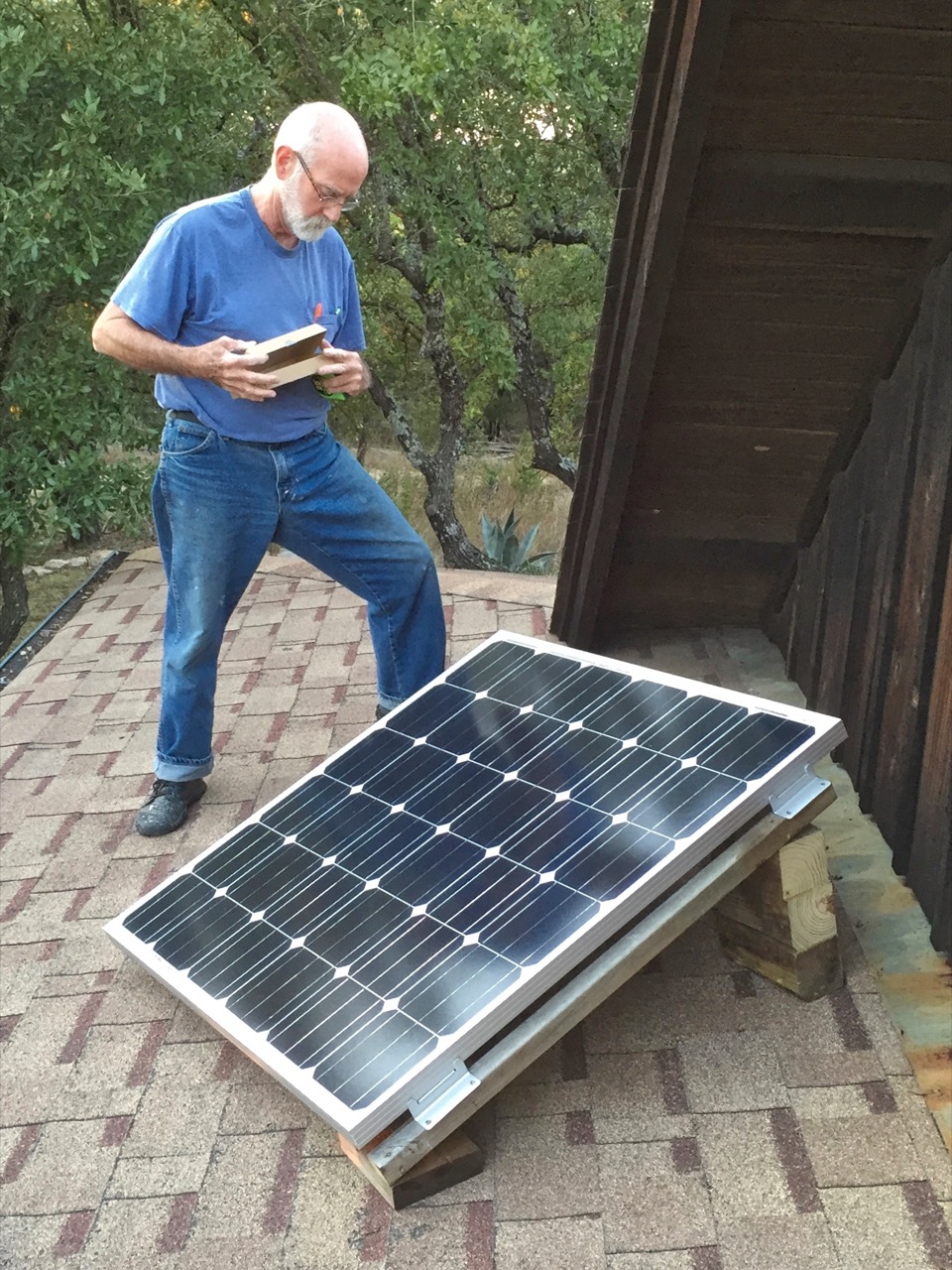
Over the past few years, I’ve worked on several small solar projects here at Roy Creek Ranch. From a simple system to “top-up” the storage battery in the Teardrop trailer and upgrading it to make an off-grid camper, to powering my amateur radio station, I’ve been interested in harnessing the sun for some time. These projects add capabilities to our camping and radio experience. Adding solar panels, a charge controller and additional 12 volt outlets made it possible for us to camp without requiring “shore power” thus extending our ability to enjoy remote areas. Likewise, solar power makes emergency operation of an amateur radio station possible during severe weather even if the power grid or public service radio systems are down. In short, a little investment in solar power makes an outsized contribution to capabilities and enjoyment relative to the investment.
The projects helped me learn about design and installation of modest solar systems and it’s time for the next project: powering a rainwater system with solar and making it off-grid capable. The idea developed over the last few months as we gained experience. While designing solar systems can be complex, many projects are within the reach of the average solar enthusiast with the help of a few formulas and basic explanations. I hope to outline this process in the next few posts by taking you along for the ride. By the end of the project, we will have an off-grid system to clean and pressurize water from large tanks of rainwater making it available in our house 24/7, year around, without help from the commercial power grid.
We’ll approach the design the same way an engineer would: measure first, then size the system.
To move from concept to design, the next step is calculating actual energy use. In the next post, we walk through the math behind solar power system sizing and show how to turn real measurements into system requirements.
Goals for the project
- measure the daily average power needed to pump rainwater for household use
- design a solar power system to provide that power with at least 3 days of extra storage for overcast conditions
- allow for the rapid change back to commercial power during equipment failures
- keep the cost as low as possible
- develop additional expertise in the design and installation process
- collect data on the operation of the such a system
Measuring Real-World Power Usage
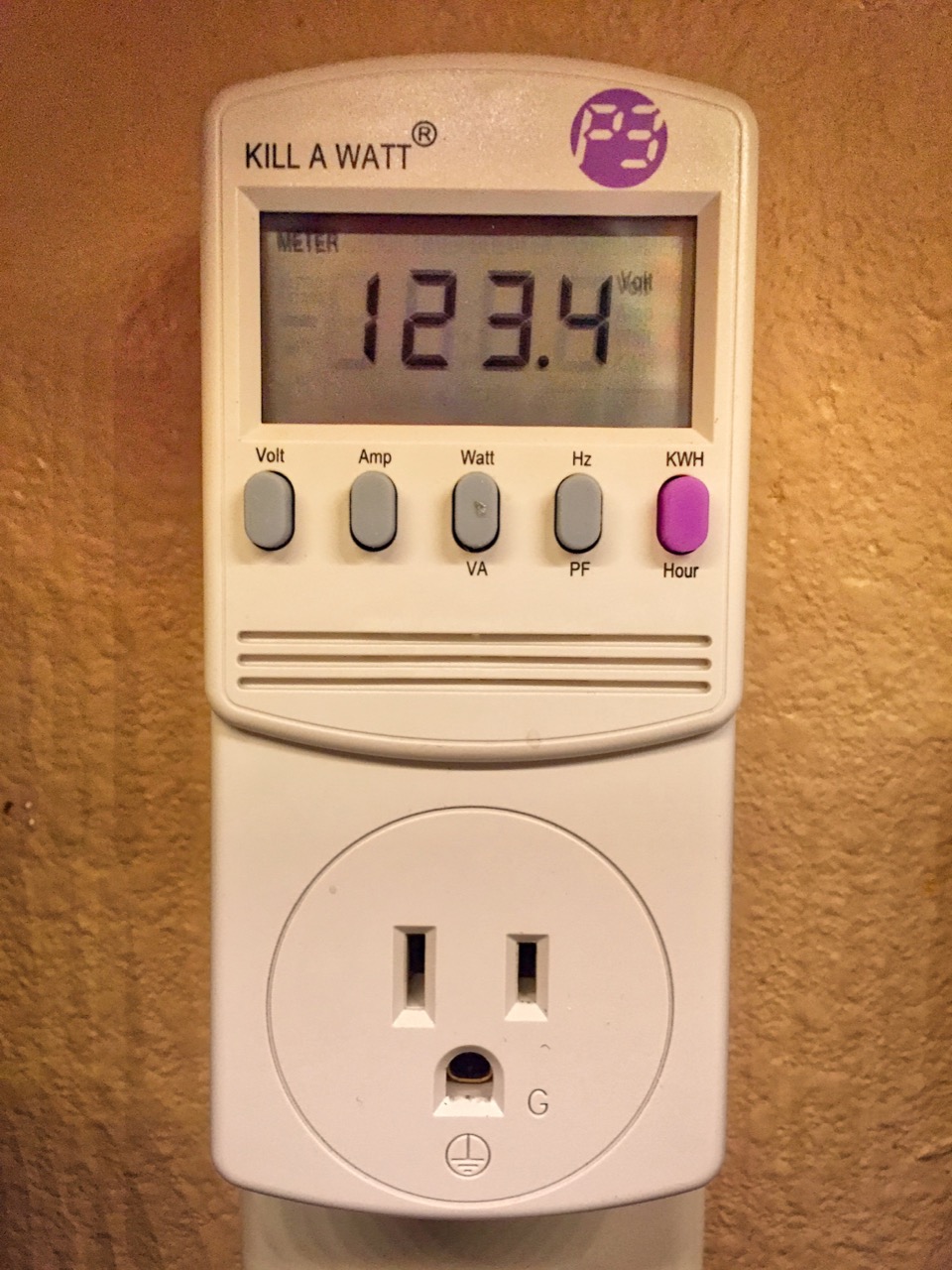
As mentioned in the goals, the first step is to understand how much power is needed. Anyone who has paid an electric bill knows a little something about this. For your home, the utility company installs a meter that measures the power used during a fixed period, usually a calendar month. That power use is measured in “kilowatt hours” or kWh. For this project, we want to power a specific part of our home, the rainwater system, not the whole house.
Daily Energy Requirements for the Rainwater System
Fortunately, this is easy to measure with a little tool called the “kill-a-watt” meter — available for just a few dollars. There are two 3/4 horsepower pumps in our rainwater system, one for each set of tanks. They are used one at a time. By plugging one of the pumps into the kill-a-watt meter and then plugging it into a 120 VAC outlet, we can measure the power used for a given period of time. The water pumps require a fair amount of power — about 1100 watts — but do so in short bursts of a few minutes per hour.
Water pressure is maintained by a pressure tank so the pump doesn’t have to run every time a faucet is opened. Monitoring the meter over a week revealed about 1300 watt-hours of power consumed per day — an important step in solar power system sizing. This is what the solar system will have to supply.
Understanding Power vs. Energy (Watts vs. Watt-Hours)
So what’s the difference between watts and watt-hours? Watts are a unit of power — the rate at which power is used. You might think of it as a rate of flow. In the case of the 3/4 horse pump, power must flow at the rate of about 1100 watts in order for it to run.
Watt-hours adds the time component and are a measure of energy. It represents the amount of work completed. If the pump were to run for one hour, It would have consumed 1100 watt-hours of power. It’s simply the power rate (watts) multiplied by the time (hours) power is in use. 1100 watts times 1 hour = 1100 watt-hours.
Kilowatt-hours (kWh) is obtained by dividing watt-hours by 1000 (kilo-1000, 1300 watt-hours = 1.3 kWh) If you wanted to power several devices, you would measure their power use independently and add those numbers together. A search of the web finds several charts with average power use for typical appliances. This one from ConsumerReports.org is a good example.
From Measurement to Sizing a Solar Power System
Now we have a starting point to design our system: a real measurement of daily energy use. In the next installment, we’ll use this number to determine panel size and battery capacity—completing the core engineering steps in sizing a solar power system sizing.
Solar Resilience Project Series
Follow the evolution of the Roy Creek Ranch solar system:
Phase 1 — Foundational Systems
- Solar Power for the Amateur Radio Station (2015)
- Solar Powered Rainwater Project (2017)
- 2 kW Shop Solar System (2019)
- Build a Handy 12-Volt Solar Generator with LiFePo4 Batteries (2023)
Phase 2 — Expansion & System Upgrades
- Solar Power System Upgrade (2022)
- The Really Big Lithium Battery (2023)
- Solar EV Charging — Ioniq 5 (2024)
- Inverter Upgrade for EV Charging (2025)
- Solar Garage EV Charging (2026)
Pingback:Solar Powered Rainwater Project – The Chinese Connection | Roy Creek Ranch
Pingback:Solar Powered Rainwater Project – Batteries | Roy Creek Ranch
Pingback:Solar Powered Rainwater Project – Completed? | Roy Creek Ranch