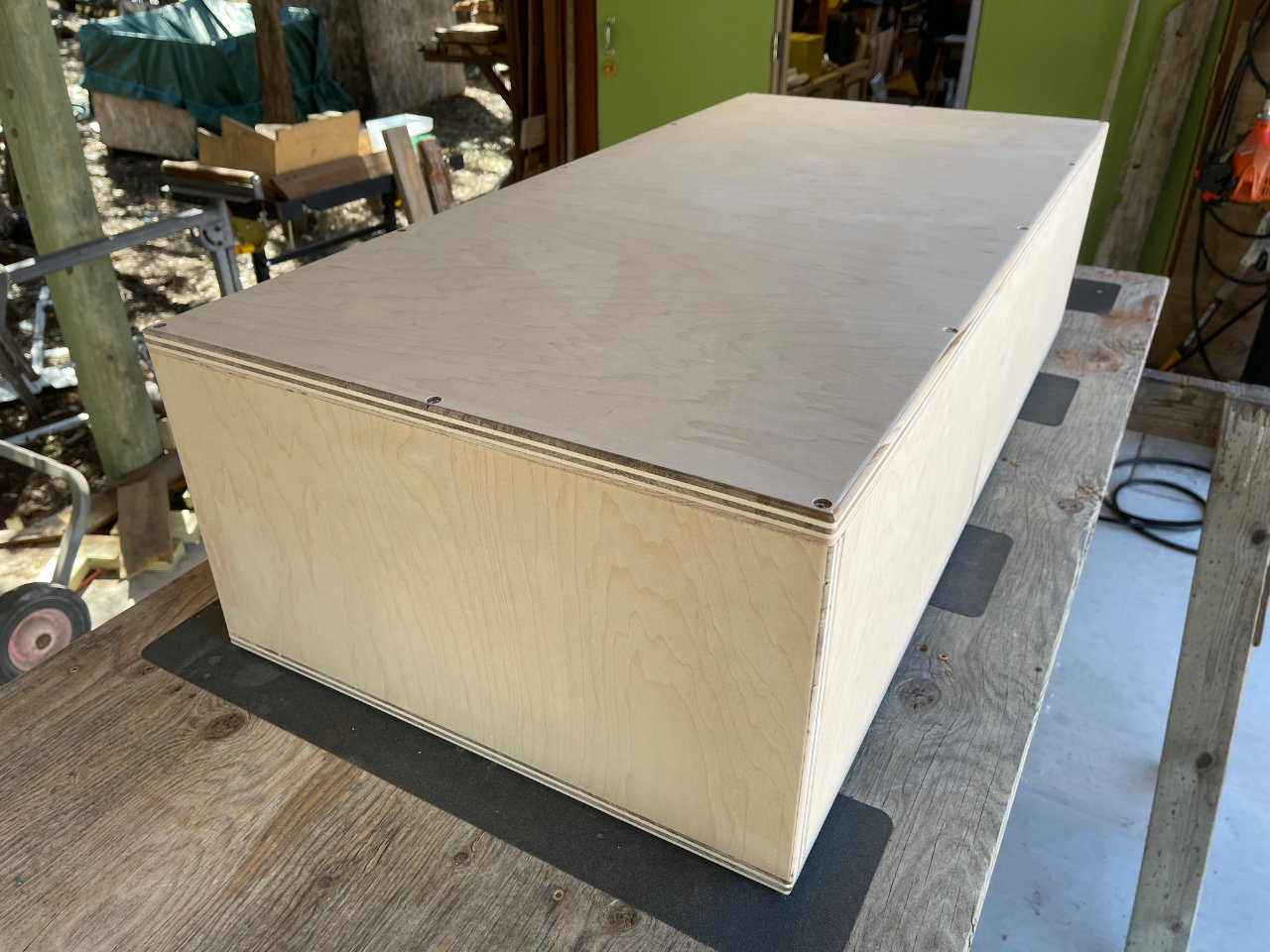
Build a Really Big Lithium Ion Solar Battery
The Really Big Lithium Ion Battery
When the solar power system at Roy Creek Ranch was first installed, energy storage relied on traditional lead-acid batteries—reliable, but limited in both usable capacity and long-term performance. As lithium iron phosphate (LiFePO₄) technology became more accessible, it opened the door to a significant upgrade.
This project marks a major step forward: the design and construction of a large-scale, 48-volt lithium battery system to replace the original lead-acid bank. Building on earlier experiments with smaller lithium systems, this effort moves from learning and prototyping into full system integration—where capacity, current handling, safety, and serviceability all become critical design concerns.
In this series, we’ll walk through the complete process: from cell selection and mechanical design to bus bar fabrication, battery management systems, and final assembly. The result is a scalable energy storage platform that forms the backbone of the ranch’s evolving solar infrastructure.
Like most projects at Roy Creek Ranch, this one began with a simple question: how far can we push this system using readily available components and a bit of ingenuity?
Really Big Battery Series:
[Design] [Box] [Bus Bars] [BMS & Assembly]
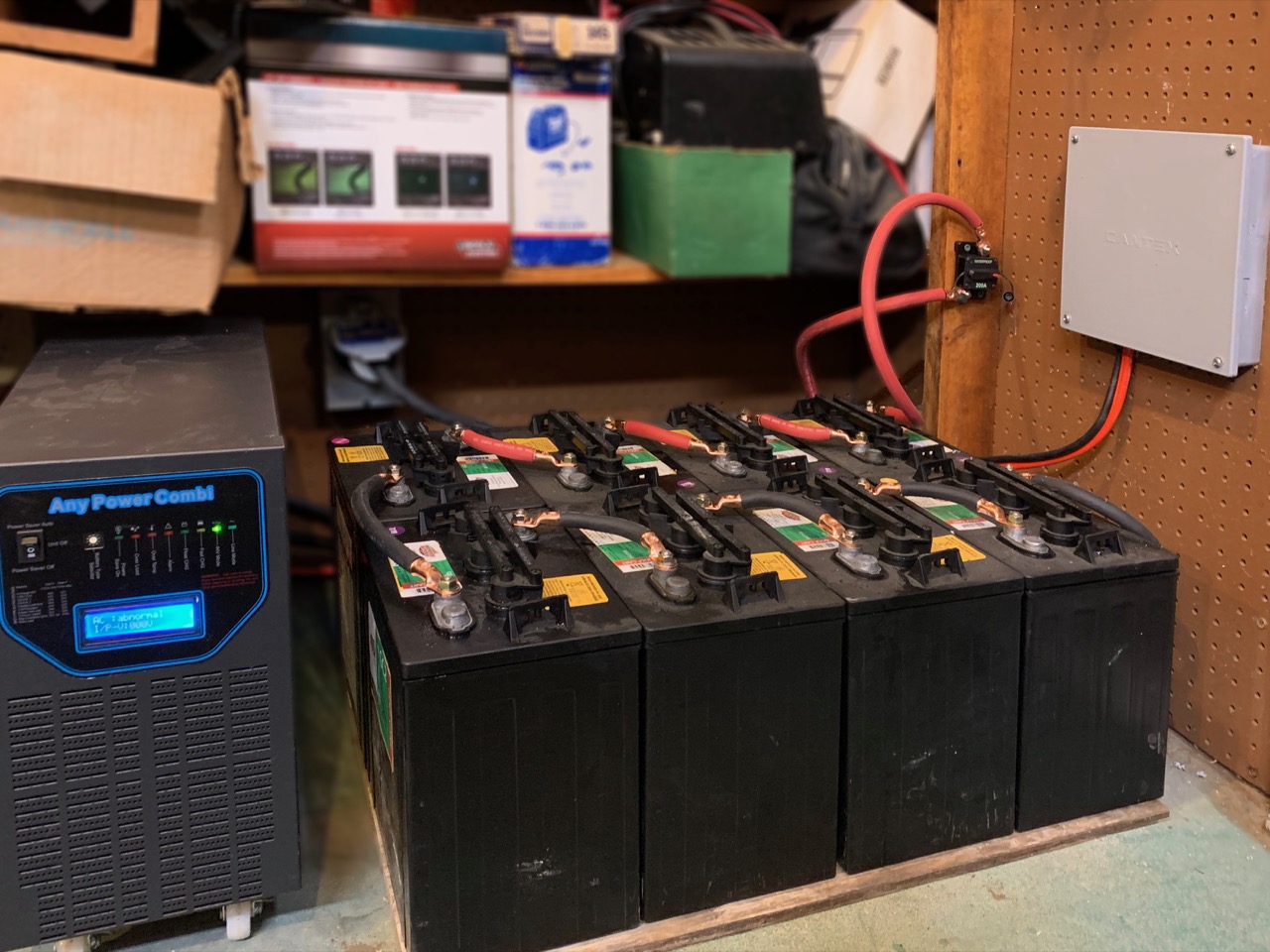
Shop Solar System showing the Inverter, Batteries and DC Wiring
Lead Acid vs. Lithium Ion
The current battery pack consists of eight 6-volt, lead-acid, golf cart batteries. Together, they have a capacity of 190 amp hours at 52 volts or about 10,000 watt hours.
The LiFePo battery will consist of 64 60-amp hour cells, wired in series/parallel to provide 52 volts at 240 amp hours or about 12,500 watt hours.
Lead-acid batteries can only supply 50% of their capacity without damage. Repeated discharge greater than 50% will shorten their life. LiFePo on the other hand, can routinely supply 80% of their capacity without difficulty. This effectively doubles the capacity of the battery system. Instead of a usable 5000 watt hour capacity from the lead acid battery, we’ll have a 10,000 watt hour capacity from the LiFePo battery. A great improvement!
Design considerations
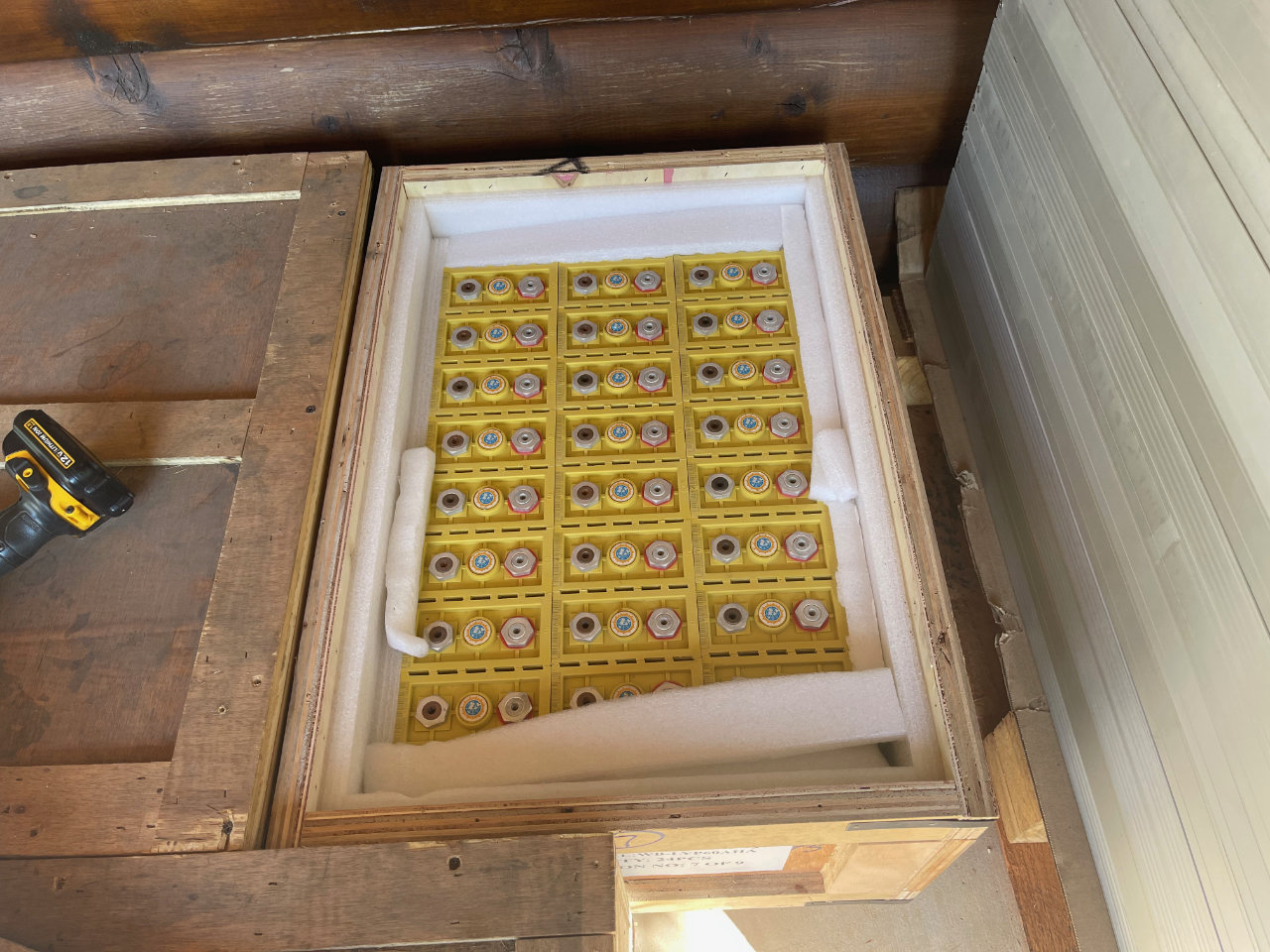
New LiFePo cells
Regular readers of this blog will remember I purchased the LiFePo cells from a buddy’s surplus business. A description of them can be found in the Solar Generator post. Of course, having the cells is just the first step in building the battery. We’ll need a container, bus bars, a Battery Management System (BMS) and other miscellaneous hardware to make a functional 48-volt battery.
Packaging
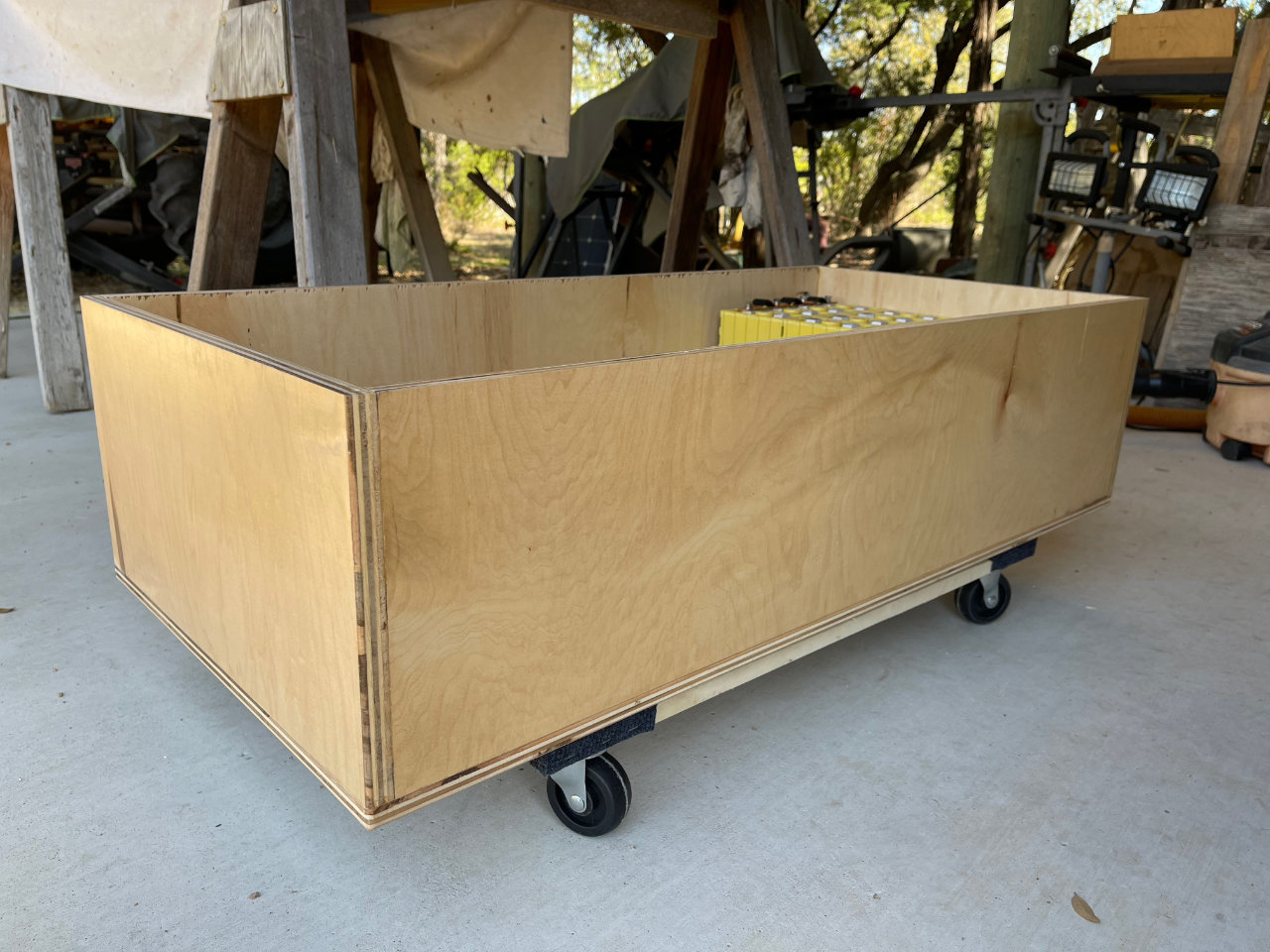
Battery box on furniture dolly
The first question was how to package and move them around? Each cell weighs 2.3 kilograms. With 64 of them in the battery, that’s just over 147 kilos. Nearly 325 pounds! A little browsing the net provided a neat solution. A box made of 3/4-inch plywood would handle the weight, and would not be too hard to build. As for moving them — a furniture dolly supplied by one of the overseas tool suppliers would be perfect. We’ll examine the construction of the box in a future post.
Copper bus bars
Bus bar comparison
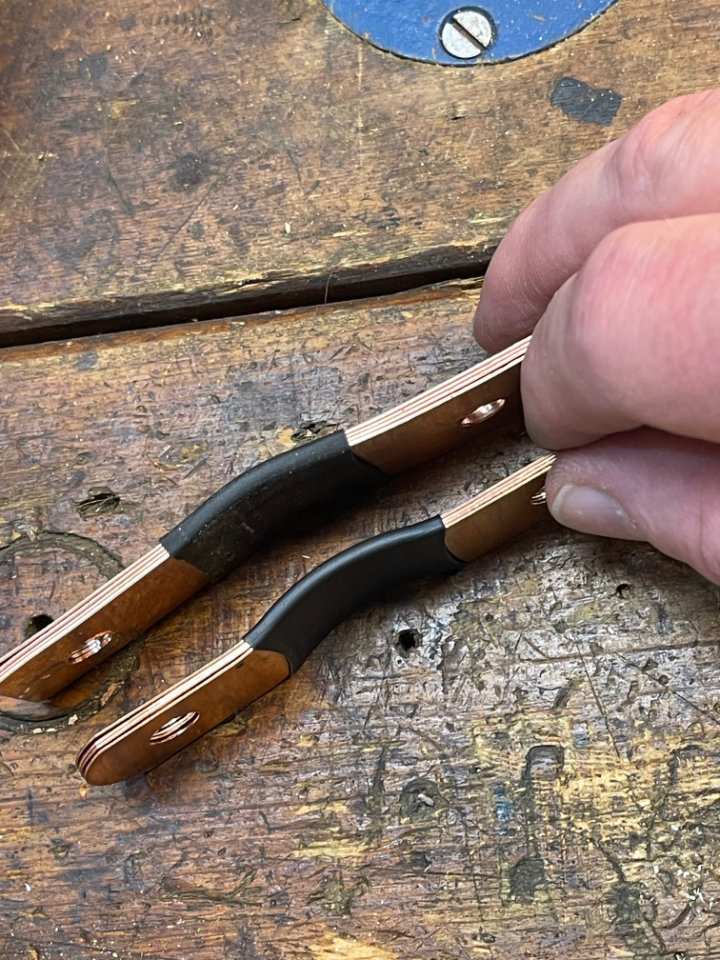
We’ll also need quite a few high-current bus bars to connect the individual cells. A fortunate find on eBay yielded 50 such bus bars, but I had used quite a few of them on the earlier projects, and they weren’t quite big enough to handle the anticipated current. Purchasing copper strap and making my own seemed feasible. This approach would necessitate the purchase of some metal-working tools, but who doesn’t like more tools? This will also be the subject of a future post.
The Battery Management System
RadioB 16S 48V 100A BMS diagram
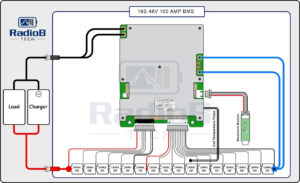
Next, a Battery Management System (BMS). They are rated by number of cells in series, output voltage, and current capacity. Thus, 16 cells connected in series to provide 48 volts (nominal) at 100 amps becomes a 16S 48V 100A BMS. I purchased such a BMS from RadioB for $140. Besides heavy copper wire and copper lugs for the output, I’ll also need a high current connector and circuit breaker/disconnect. A final post will outline the assembly of all the elements to complete the battery.
Project goal and documentation
When completed, the RBB will replace the lead-acid batteries that are now in use. I’ll move them down to the system I built for pumping water to increase its capacity. Since the BMS is limited to 100 amps output, the battery will be capable of a maximum of about 5000 watts output. That’s why I plan to build a second one; that will double the maximum load and storage capacity to 10,000 watts and 20,000 watt-hours respectively. As mentioned earlier, I’ll post follow-ups for the box, bus bar manufacturing and final assembly as they are completed. Watch this space!
Solar Resilience Project Series
Follow the evolution of the Roy Creek Ranch solar system:
Phase 1 — Foundational Systems
- Solar Power for the Amateur Radio Station (2015)
- Solar Powered Rainwater Project (2017)
- 2 kW Shop Solar System (2019)
- Build a Handy 12-Volt Solar Generator with LiFePo4 Batteries (2023)
Phase 2 — Expansion & System Upgrades
- Solar Power System Upgrade (2022)
- The Really Big Lithium Battery (2023)
- Solar EV Charging — Ioniq 5 (2024)
- Inverter Upgrade for EV Charging (2025)
- Solar Garage EV Charging (2026)