To Be, Or Not To Be
Editor’s Note (2026)
Before beginning the restoration, I spent several months asking a simple question: Was the Weber worth saving? What began as a practical evaluation of an old piano gradually became an exploration of its history, its original owner, and my own connection to the instrument. Looking back, this was the moment when curiosity began to outweigh caution.
Thanksgiving Doubts
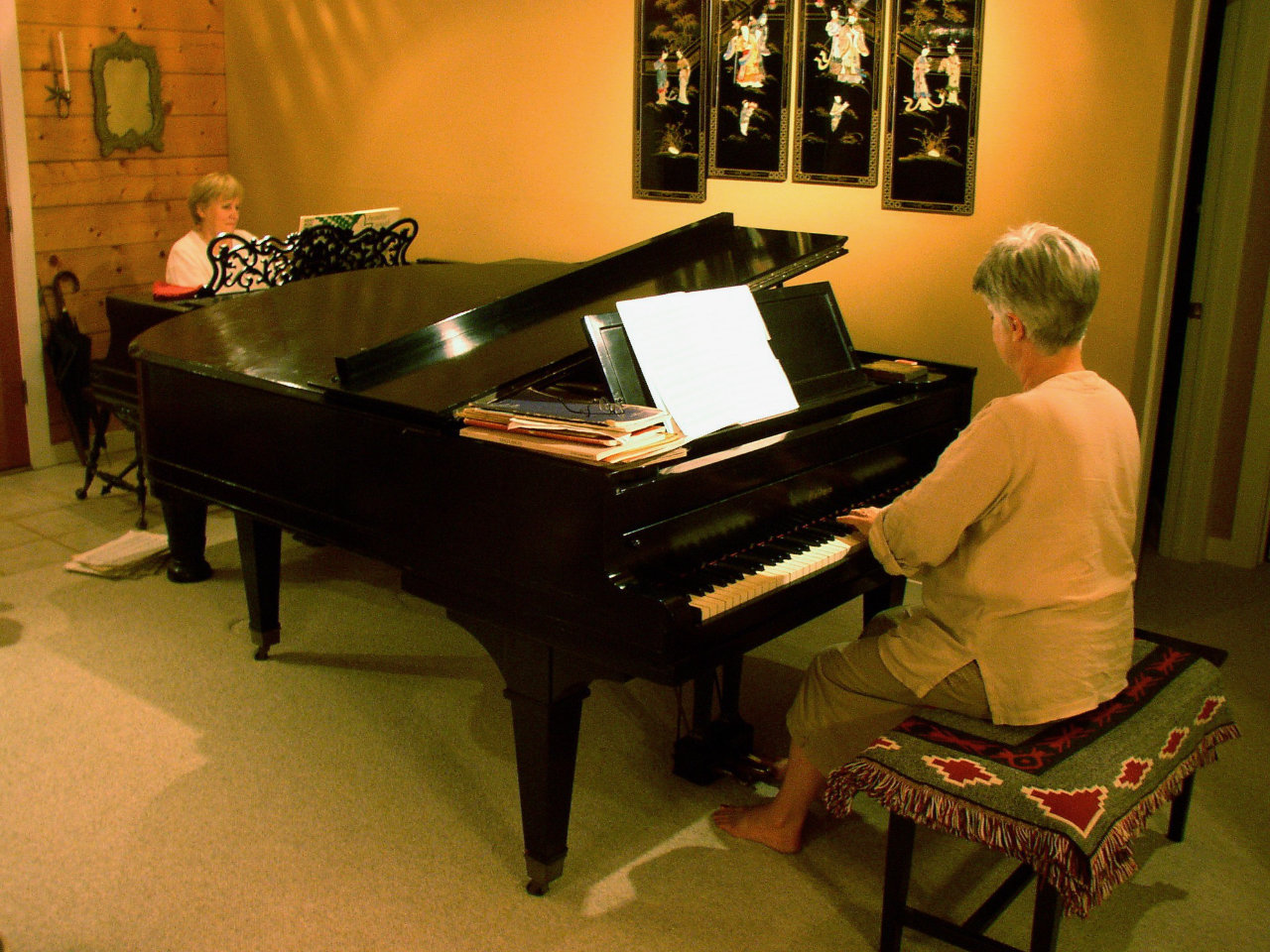
It would take some time to get started. The holidays were just around the corner and everyone would be busy. I had time to try the idea out on my friends and family to see if I had missed something important, or just lost my mind. Fortunately, Marilyn and I would be hosting our annual Thanksgiving celebration where we invited friends and others who were not otherwise with family. The group often numbers more than 30, and many of them are players, so the pianos are in almost constant use. Over the years, we’ve heard some truly astonishing music, from exceptional musicians, who also bring a hot dish or side to the potluck.
As we got underway, I introduced the idea of rebuilding the Weber action to various friends. It had always been something of a “red-headed stepchild” because the Baldwin was so much better. Normally we only heard the Weber during two-piano performances. Opinions varied, but everyone was supportive of the idea, although there was some skepticism with regard to the final result. Almost everyone had already heard my story of its acquisition, and enjoyed the romance of its history as I did, but it would be quite a commitment for a seemingly modest payoff.
Down the Research Rabbit Hole
By January — a little closer to a decision — I decided to see if I could verify any of the story that I had been telling for so many years, or what Jeffrey had told me. It was easy to narrow its date of manufacture. Serial numbers for most pianos built in the United States are a matter of public record and can be found easily on the Web. While not specific to a particular piano, these records identify ranges of serial numbers from each manufacturer by decade or half-decade. My piano, Weber serial number 35680, was built between the years 1890 and 1895. So far, so good. Now, what about Miss Whitmore? I didn’t expect much as I entered her name into the search engine, and was surprised at the number of useful “hits” it returned. Perhaps she was more prominent than I had imagined. There were other factors as well.
In the late 19th and early 20th century, there was no television or radio, and the phonograph was still a curiosity with only a limited number of recordings available. Newspapers were commonplace with multiple publishers in many cities and magazines were also popular. Those with a little more means could attend concerts, lectures and the theatre, and entertained each other with the vocal and instrumental music they made themselves using instruments like the ubiquitous piano. Between 1900 and 1920, over a million and a half pianos were sold in the US, and many children studied piano.
Newspapers, besides reporting the news, printed columns detailing the activities of socially prominent people. Specialty magazines, like Musical America, printed page after page of performances and the social elite who attended them. It was the “social media” of the day — the turn-of-the-century Twitter. I can remember seeing copies of The Etude — a magazine published by Theodore Presser and aimed at all musicians with music-centric articles on history, literature, gossip and politics — in my piano teacher’s waiting room. Libraries subscribed to these and other magazines and the individual copies were ultimately bound into volumes for researchers.
In December of 2004, Google announced its intention to digitize the estimated 130,000,000 books held in libraries around the world, and by 2015 some 25 million were searchable online. Along with everything else, Google had vacuumed a trove of music and social information from the popular magazines with their grand digitization project. I was finding specific mentions of Eugenie Whitmore in the digitized material through their search engine and had unwittingly tapped into an epic research tool.
Miss Whitmore
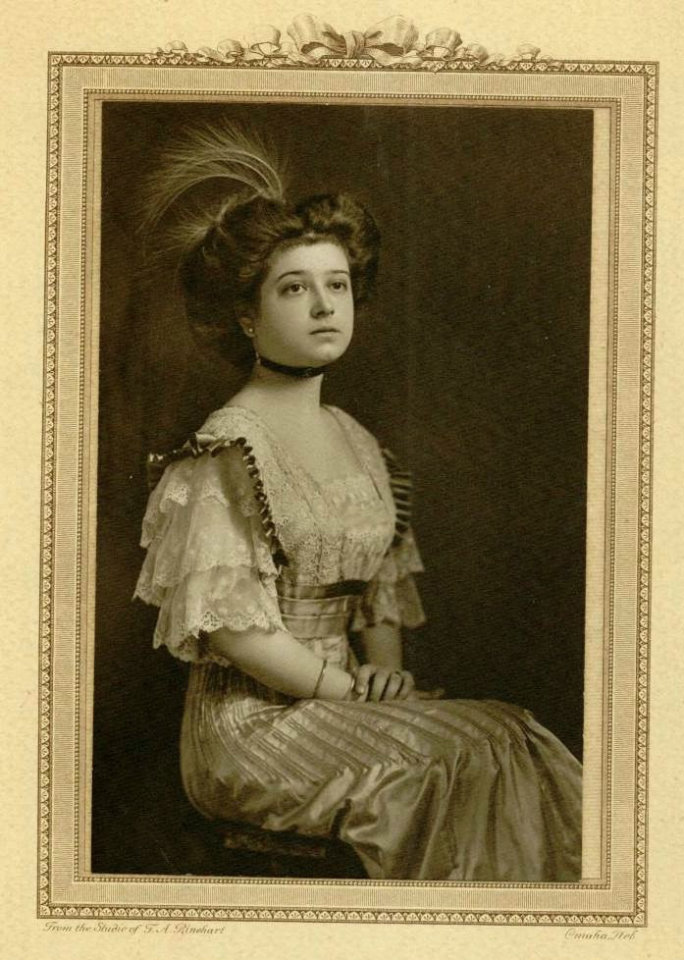
Miss Whitmore was indeed socially active. Most intriguing was an article in the Hatchet, a small magazine of a dozen or so pages published in 1898 to raise funds for a Girl’s and Boy’s building at the Trans-Mississippi Exposition in Omaha, Nebraska. In it, was a mention of Miss Whitmore who “When scarcely eight years old she surprised everyone by her execution of the well known Paderewski Minuet” along with a photograph of her in Victorian finery. The publication had confirmed her precocious musical interest and provided an authentic image.
Other searches revealed correspondence with Rudolf Serkin, a famous 20th century concert pianist. Musical America mentioned a public recital in 1919 with Miss Whitmore as one of its participants. A photograph held in the Douglas County Historical Society depicted Miss Whitmore and others selling Polish dolls as a fund raiser for Polish relief during Ignace Paderewski’s Omaha performance in January, 1916. While not specifically confirming aspects of the piano’s story I had been telling, they certainly made it more plausible. What about the piano itself?
The Piano Itself
The Weber Piano company was founded in 1852 in New York and by all accounts was a direct competitor with Steinway & Sons, founded in 1854. Both founders, Albert Weber and Henry Steinweg, emigrated to the United States from Germany, and by 1897, two-thirds of the grand pianos sold in the US were made by either Weber or Steinway, suggesting that Weber had been a quality piano in its day. To my surprise, advertising ephemera on one site included a sales brochure from the 1880’s that depicted the exact Weber model I owned.
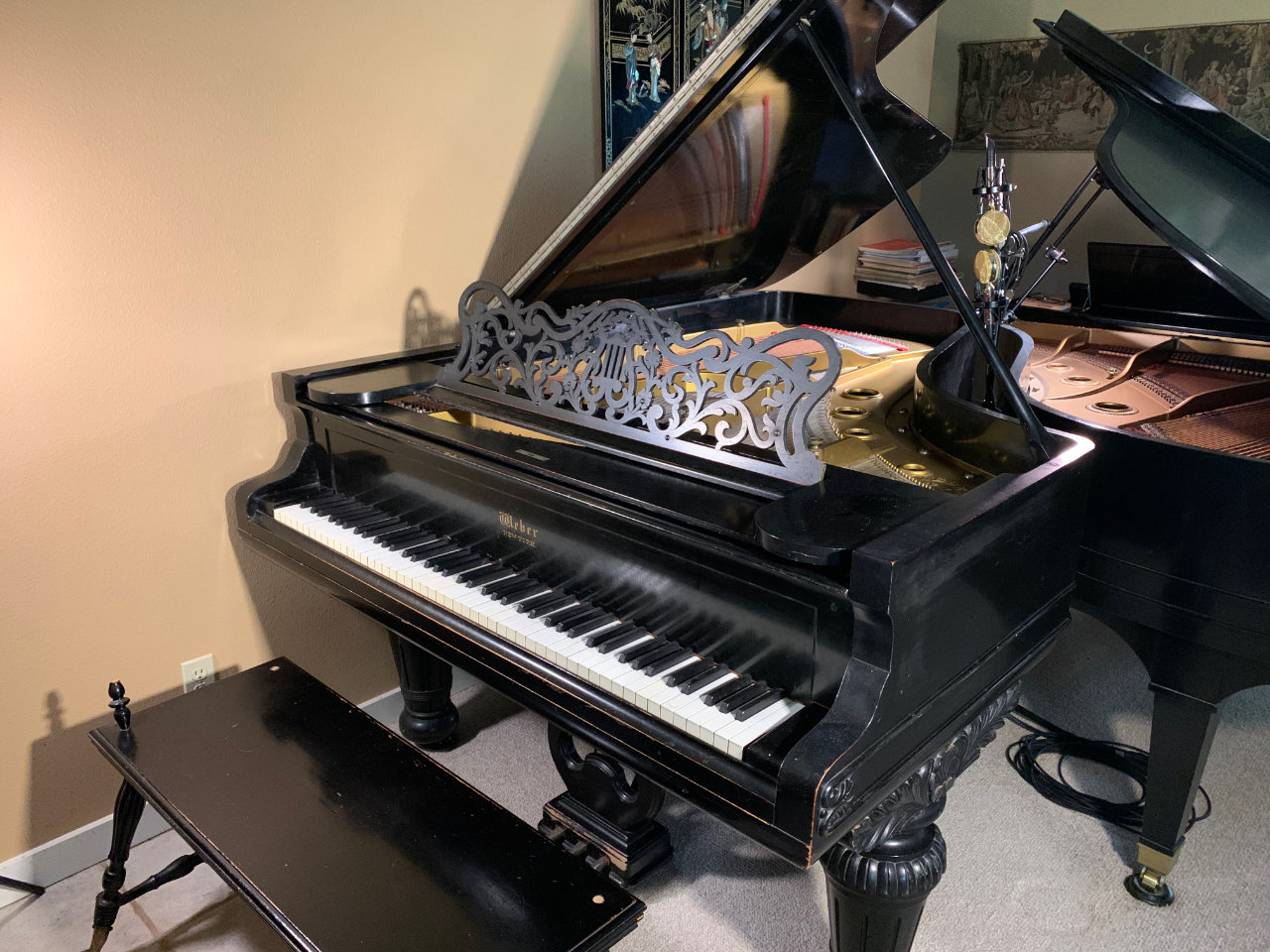
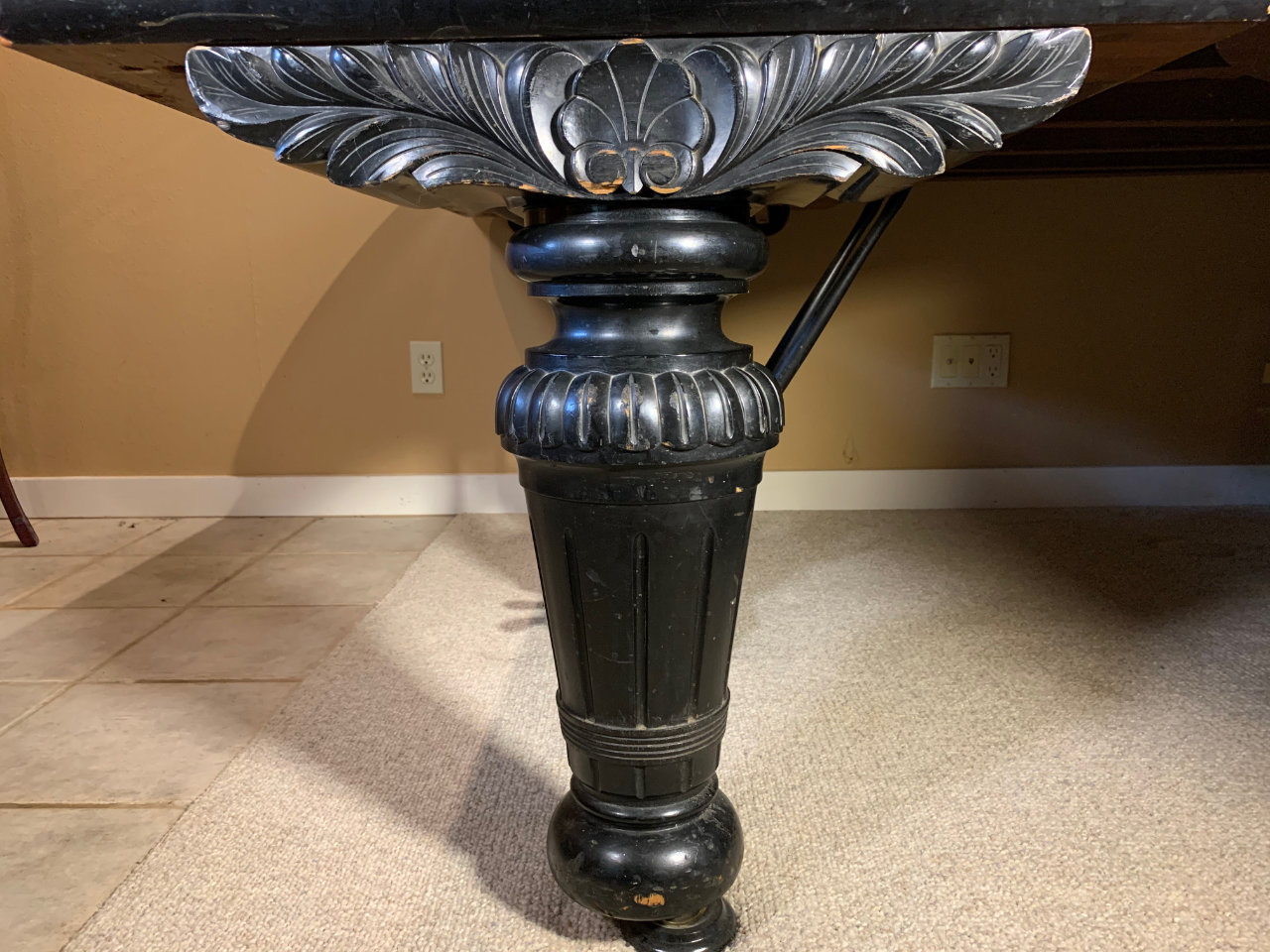
The Weber is six-feet, four-inches from the tail to key slip, and its ebony finish originally shone like a mirror. A little imagination helps, because the lid is worn from 125 years or so of use, including time spent in a Theatre Department. Everything from tools and props to performers probably landed on that lid. There is water damage around the legs. Various dents and dings, as well as numerous spots where natural wood is peeking through the ebony finish, seem age-appropriate for the venerable instrument. One gets an impression of its former glory around the rim and on the underside of the lid however, and it must have been magnificent.

The tail is squared off in the fashion of all Weber grands of the era, and it looks broad and muscular. The carved Victorian ornamentation is a little surprising for those used to the spare styling of most modern grand pianos. Three massive carved legs support pediments bearing the leaf and shell motifs common in Victorian furniture. Piping decorates the perimeter of the rim like most black grands, but with a carved leaf near the keyboard in keeping with Victorian sensibilities.
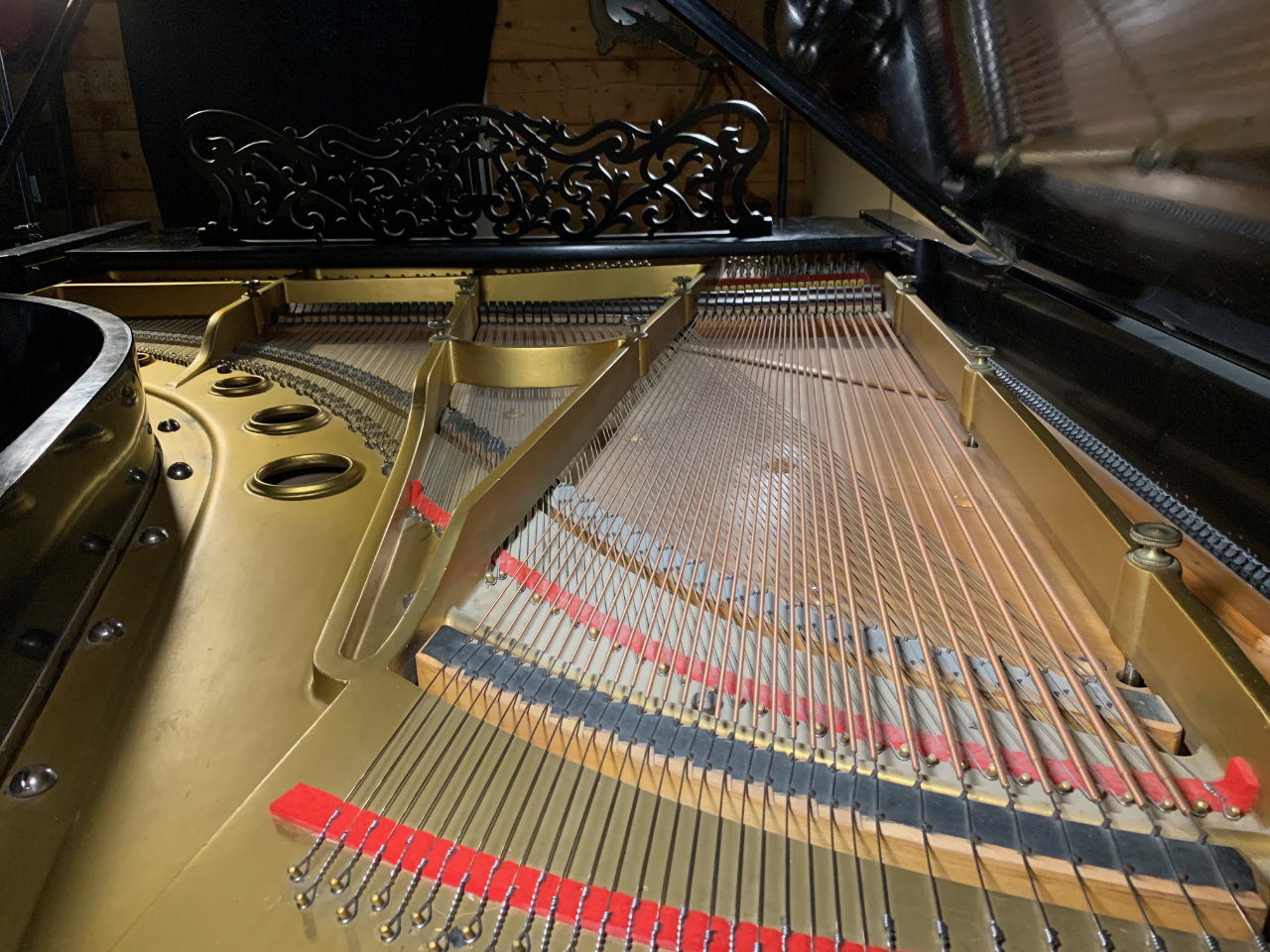
Inside, the soundboard is cracked but repaired by some long-ago technician and does not seem to harm the tone. Felted parts have faded from their once-brilliant red. The strings, replaced almost 40 years ago, still gleam. Unlike modern pianos, most of the pin block is visible under the music stand, and is not covered by the plate. The sounding part of the strings terminate at a de capo bar, not agraffes like more modern instruments. In spite of its age, tuning is rock-solid and stable — requiring only occasional attention.
At the keyboard, one is transported to another age. The elaborate, carved music stand is too beautiful to cover with music. The massive fall board opens to reveal a gothic-styled logo: “Weber” and in smaller block letters below, “New York.” Most surprising of all is the expanse of nearly-flawless ivory keys. It’s impossible to tell if they were ever replaced, but they are real ivory. The ebony sharps are worn in places, especially near the center of the keyboard, by years of use. Difficult to play with shallow key-dip and almost no ability to shape quiet passages, it’s not hard to see why my guests preferred to play the Baldwin. The tone is harsh from too many years of use and an ill-advised hammer shaping some years before. Some hammers are so worn they reveal the wooden core where layers of wool felt have worn away. The piano shows its age.
A Question of Value
But was it worth the time and effort? Viewed from strictly a value proposition, probably not. As interest in piano music has declined, the piano market has shrunk. As a child in the 60’s, I studied piano as did many of my friends. Today, pianos have been replaced by electronic keyboards that produce hundreds of sounds — not just a piano. There are myriad distractions, all demanding attention and making a focused study of a single instrument difficult. Pianos were common in homes 50 years ago, and rare in homes today.
That is not to say the market for a fine piano is gone, but stratified. The finest instruments command even greater prices than they once did, with manufacturers like Yamaha, Steinway and — the super premium Fazioli — selling fabulous instruments. Professional musicians still buy professional instruments to propel their careers. It’s the amateur market that has shrunk. Where there were once dozens of manufacturers making acceptable pianos anyone could afford, there are now just a few. The Fords and Chevys of the piano world have been replaced by BMWs and Lamborghinis. In other words, the average piano of yesteryear just isn’t worth very much. A fully restored Weber would probably not satisfy a professional or serious amateur musician and would therefore be worth only a fraction of a professional instrument.
A Window into 1893
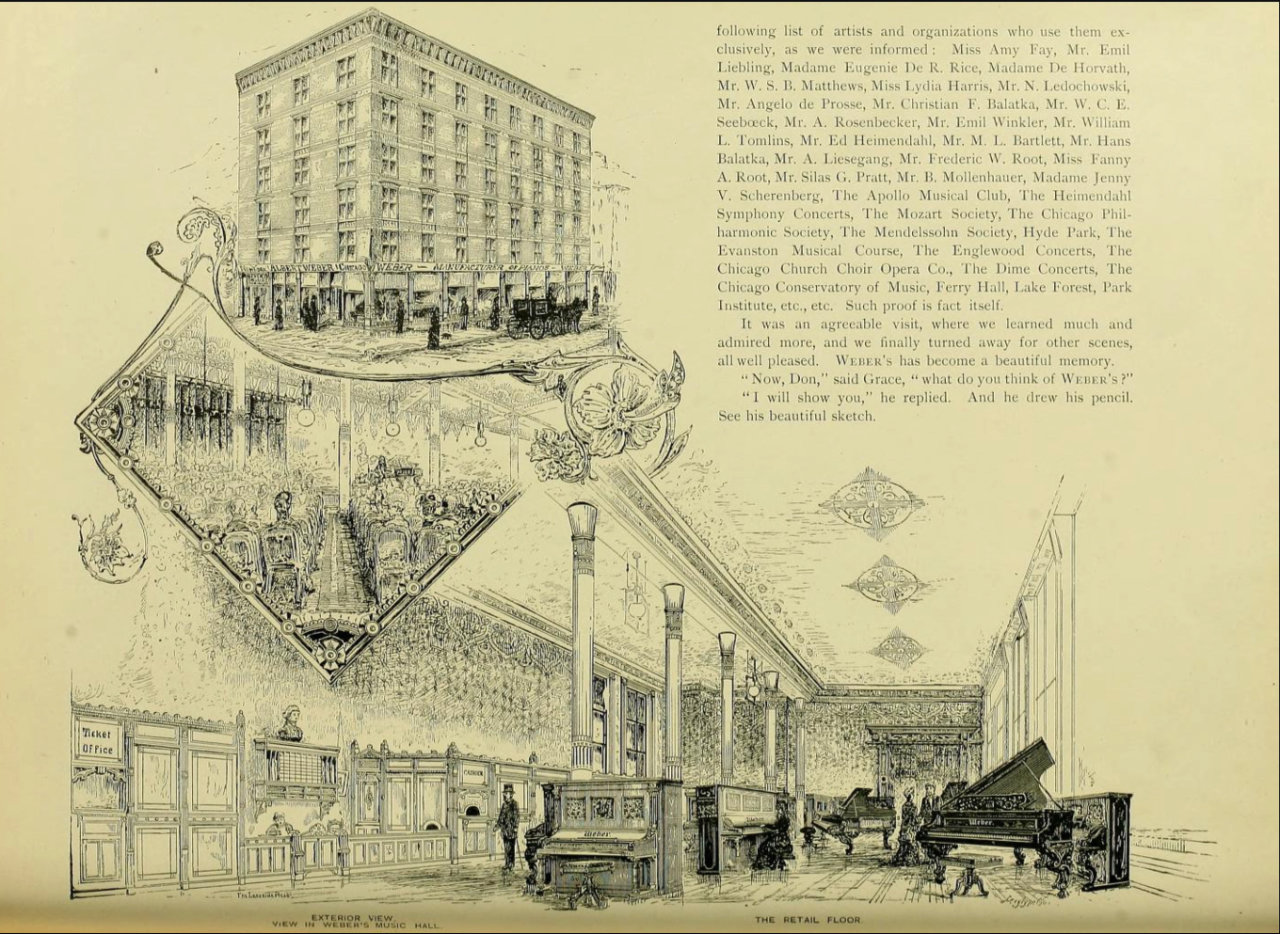
But I had something special here. A window into the musical world of 1893. A time when music lovers followed classical musicians in the same way we followed the Beatles in the 60’s or Beyonce´ today. Eugenie Whitmore had been an avid musician herself and was acquainted with some of the most famous musicians of the day. She had been involved in shaping the vibrant music scene of early 20th-century Omaha, where I grew up.
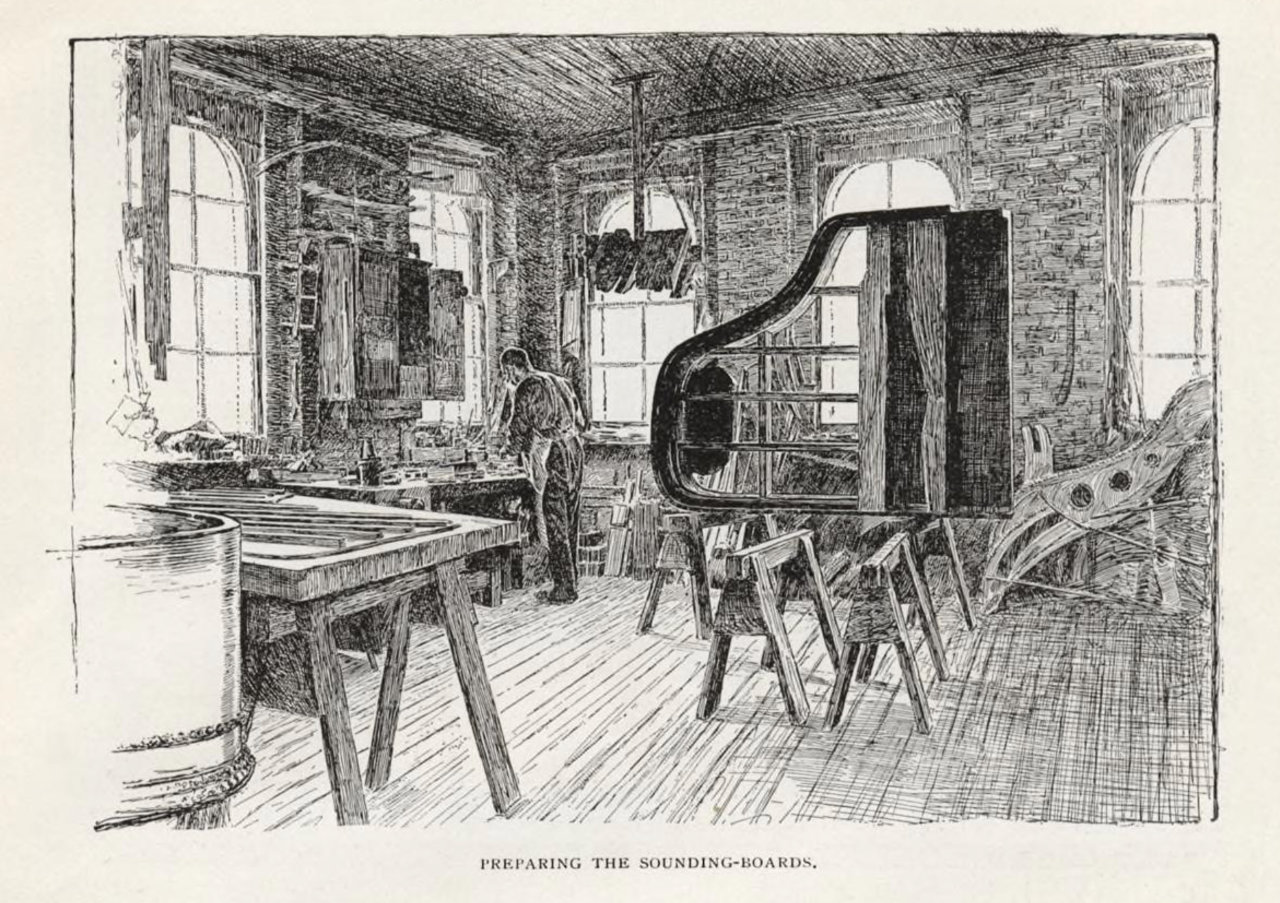
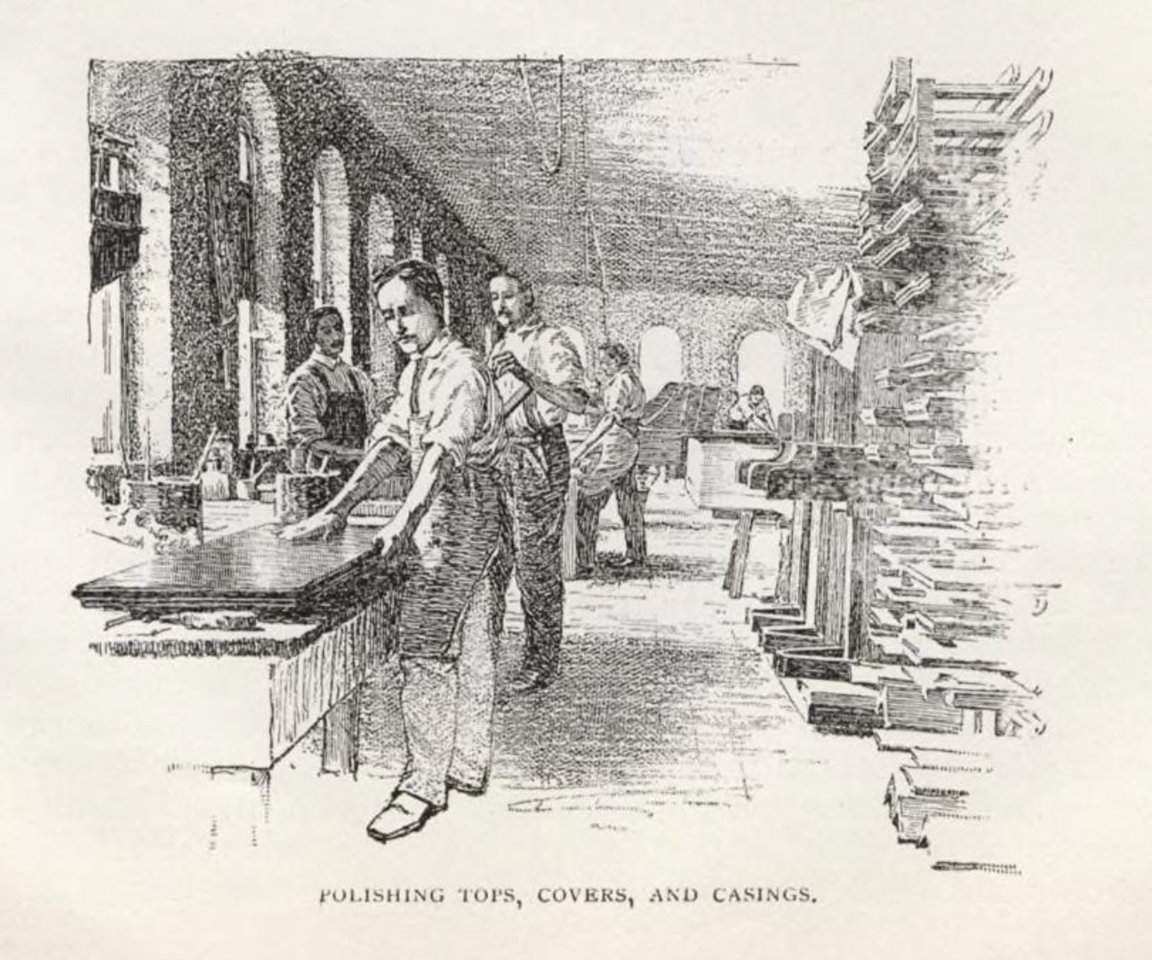
The Weber piano represents an important time in the United States. If the Victorian age was the pivot from an agrarian, hand-made world to the Industrial age we live in now, then there isn’t a better example of that transition than the era’s pianos. They were the new, industrially-produced high-tech wonders of the age, bringing the promise of genteel refinement and leisure entertainment to a newly prosperous middle class. Interestingly, the grand piano mechanism has not changed much since then. Turn-of-the-century instruments incorporated some of the best engineering and mechanical innovation available — and pianos haven’t improved much since. Still, there would be differences. Wouldn’t it be interesting to hear what Paderewski heard when he toured the United States with his Weber piano?
My Own History
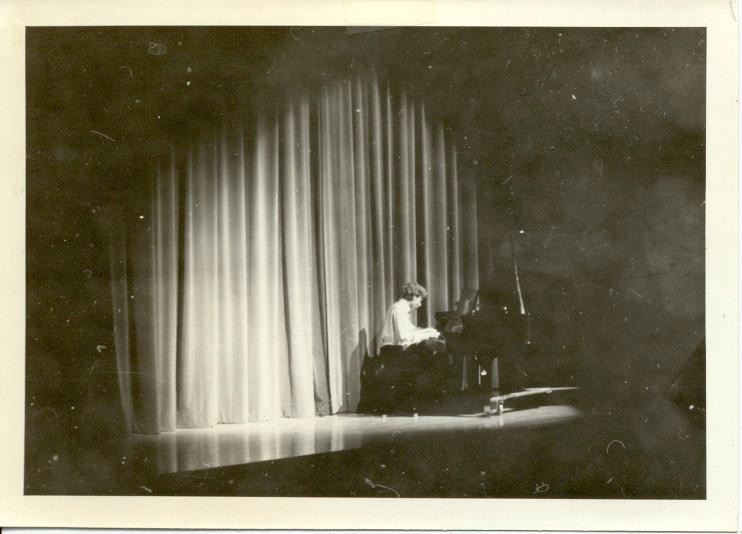
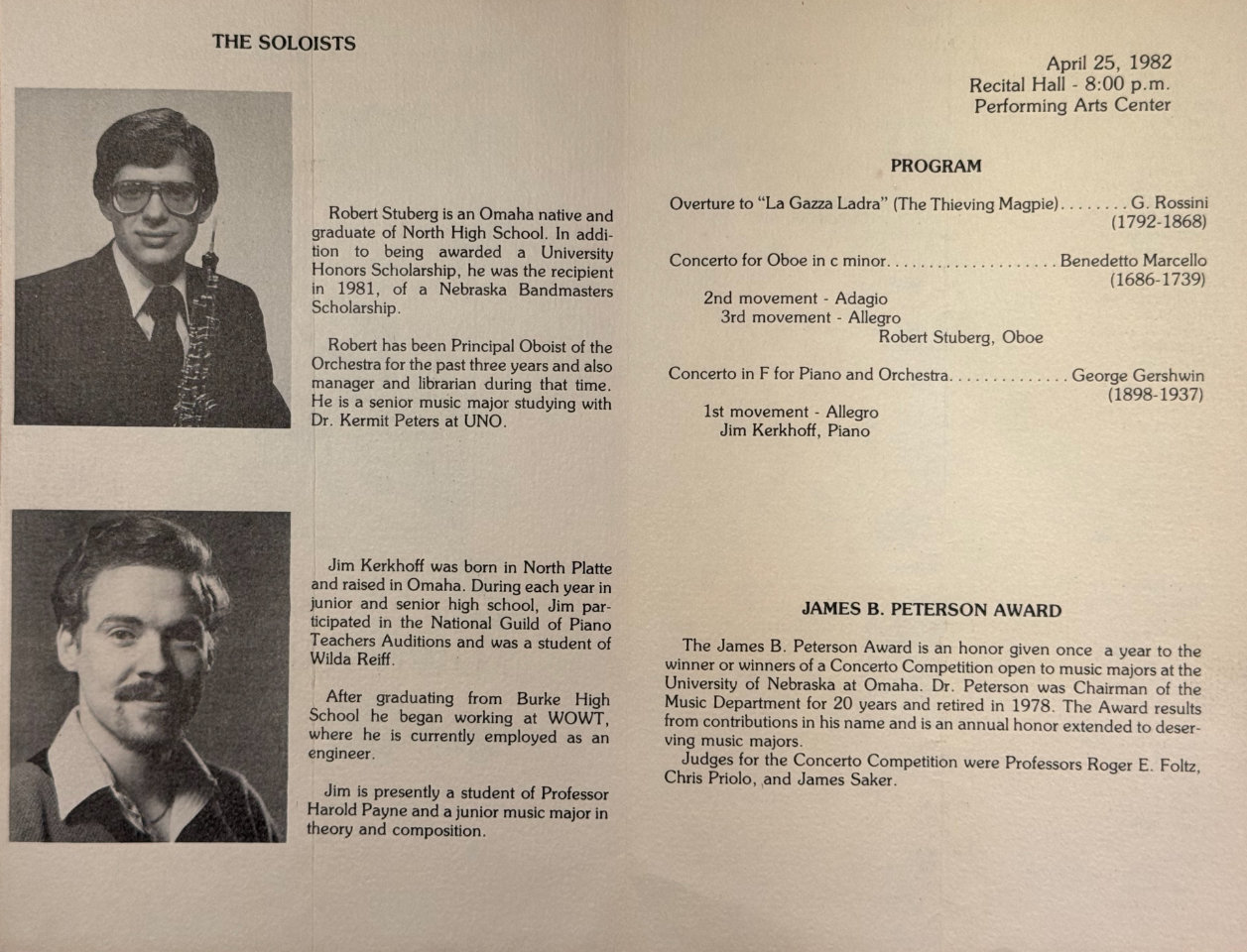
I also had some history with the piano. It had come to me when I had dreams of becoming a professional musician, perhaps with a career on the concert stage. I had spent hours re-stringing it with my friend’s help in 1982, all the while wondering if I had made a huge mistake. The pitch continued to sink after several tunings until finally, to my great relief, it began to hold a tune. I spent hours and hours rehearsing Gershwin’s Concerto in F preparing for my orchestral debut. Later, as my music dreams faded, it provided comfort for those times when a little piano music eased the pressures of life and career.
To Be, Or Not To Be
I could also do nothing. It would remain a curious, if rather large, artifact in our home with an intriguing story. But the piano was increasingly difficult to play, and occupied a lot of space in the living room. It seemed to boil down to: If the Weber wasn’t enjoyable to play, why keep it? If I wasn’t ready to get rid of it, doing nothing didn’t seem reasonable either.
Then I started to think about what had been offered. Bernard had offered to help me rebuild the action. I would have to pay for parts and supplies, and an hourly fee for his instruction, but would have access to his shop and the specialized tools therein. Most important, I would have access to his years of experience and those of Jack and Celeste, who worked with him as well. I would end up with a significantly better instrument and valuable training in the piano tech and woodworking worlds. Apart from the cost, which I could afford, the only downside was the time commitment. I imagined it would take hundreds of hours, and my project list was already overflowing. It seemed wise to act quickly though, since Bernard might be too busy to make such an offer later on. Did the Weber merit a priority spot on my project list?
The more I thought about it, the more I realized it was a chance of a lifetime. A piano that was good enough to spend time and money on while having an intensive, and no-doubt memorable experience. I would be given entrée into an historic craft that was very different than the tech world of my previous career. As had happened so many times in my life, without quite knowing how, I had been granted the very thing I most desired.
Continue Exploring the Weber Piano Project
What began as a simple email eventually grew into a larger story involving music, history, craftsmanship, and the people connected to an 1893 Weber grand piano. Visit the Weber Piano Project hub page to explore the full project.