Reviving Our Hill Country Vegetable Garden: Lessons From Nebraska Roots and Texas Soil
Reviving the Hill Country Vegetable Garden
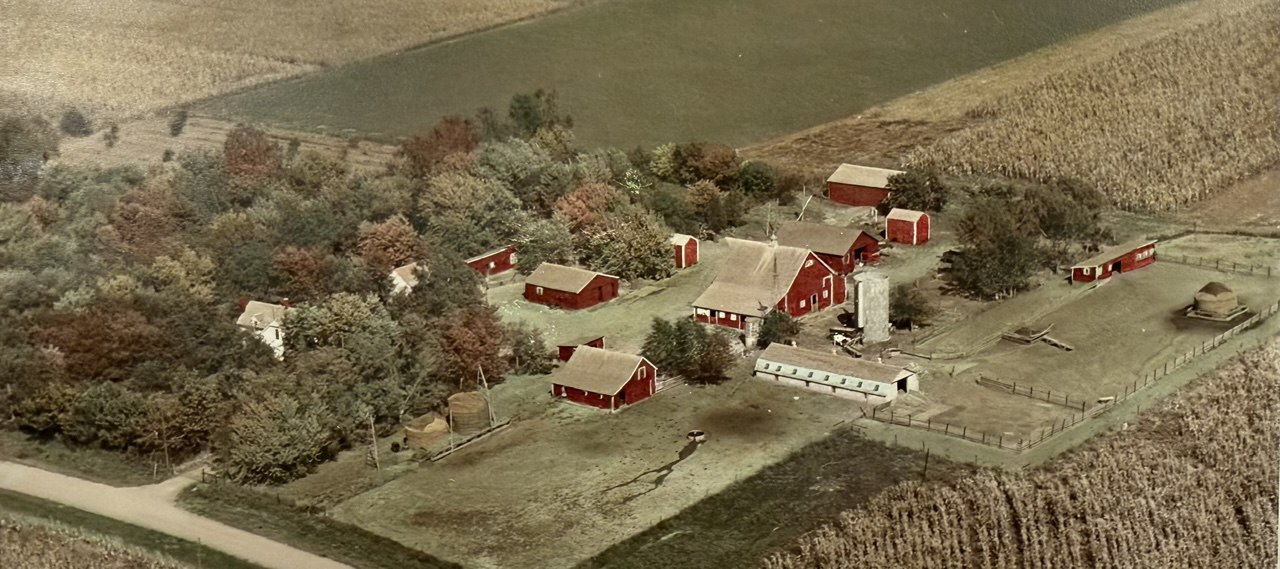
My grandparents were farmers in eastern Nebraska, and I spent a portion of my summer on their place each year. The post photo (above) shows their farm in the mid-1950’s when it was featured in the magazine, Nebraska Farmer. Gramma planted the acre-sized garden that Gramps had disced up with all manner of vegetables including corn, beans, peas carrots, onions, and so forth.
Of course the soil was so deep and fertile in that part of the state that you could drop seeds on the ground anywhere and they would grow. it was so much fun to visit that garden each day to get produce for the evening dinner while eating a few fresh veggies in the process.
My Roots in Eastern Nebraska
Gardening in the hill country is nothing like eastern Nebraska. As the saying goes, if you can grow things in the Hill Country, you can garden successfully anywhere. It’s tough. Oh there’s often plenty of rain (some years as much as 50 inches!) but it’s intermittent and tends to come in increments of a deluge. Then there’s the soil, or the lack thereof to contend with. Most gardens have to be in raised beds with trucked in soil, although native plants do well enough.
Early days at the Ranch
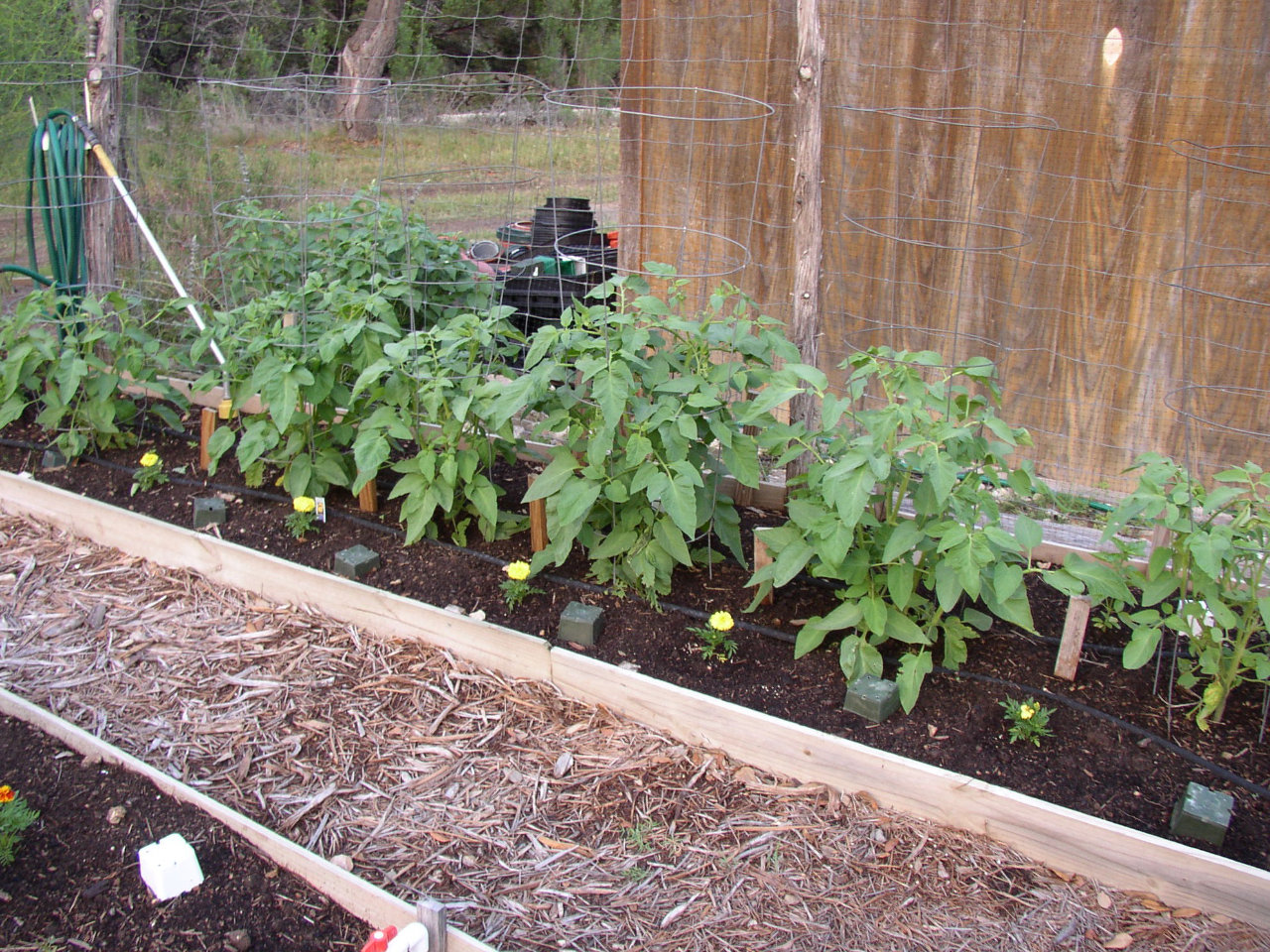
I’ve lived on Roy Creek Ranch since the late 90’s and built several gardens around the place. Some were purely decorative — landscaping — while others had a more practical intent. Over the years, I tried everything and learned a lot. In the first few years, I had some success with vegetable gardens, probably because the soil was newly produced and still fertile.
Over the years the yields diminished and the demands of my career grew to the point where I just couldn’t spend the same amount of time. Gardening was mostly limited to what I could do quickly and in harmony with the harsh Hill Country conditions.
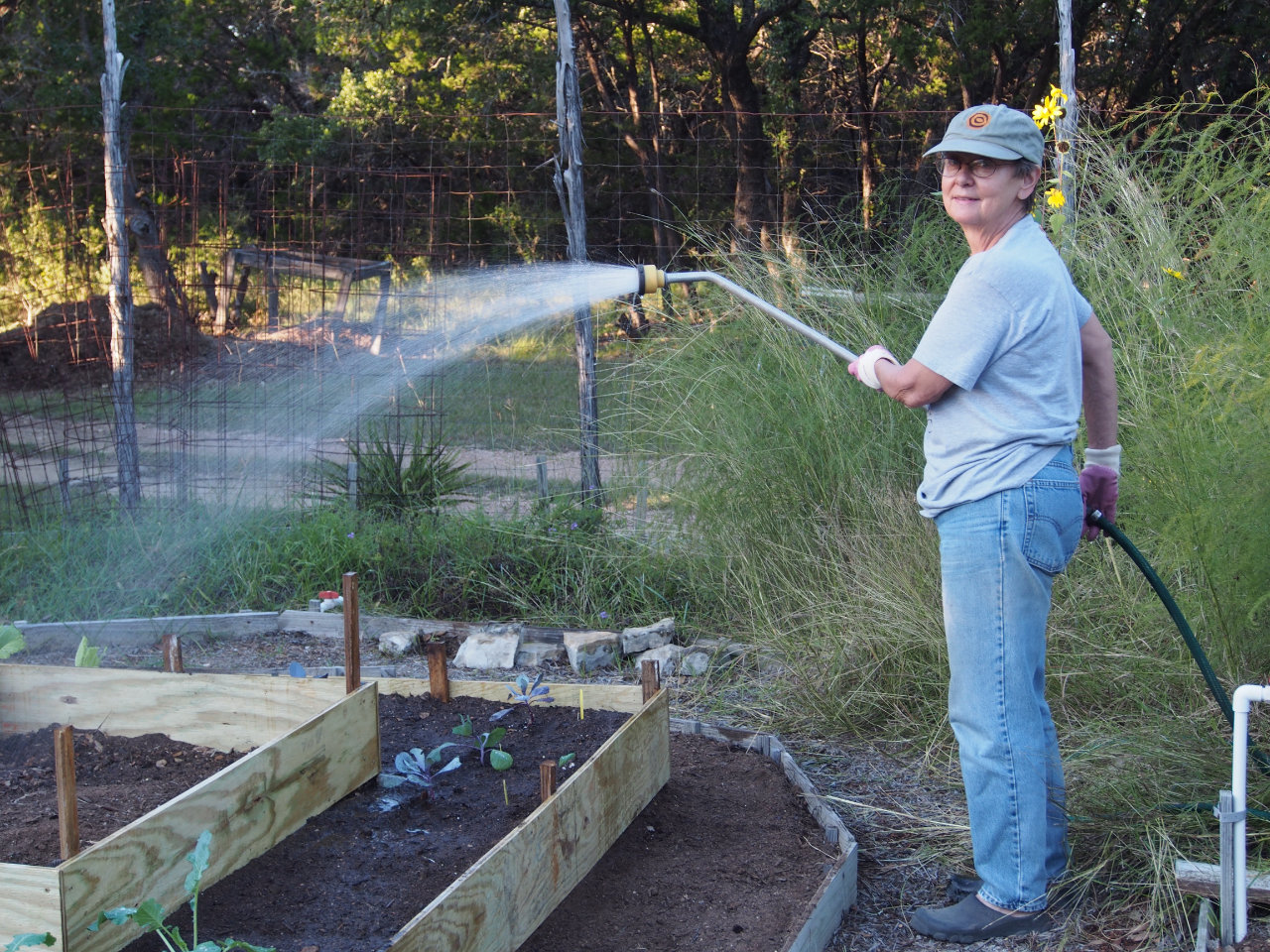
I met Marilyn about a dozen years ago, and after she moved in with me, my interest in gardening increased. She had written a cookbook called Canning, Pickling and Freezing With Irma Harding and we travelled to various International Harvester events in the Midwest and South to sell her cookbook. She also became a Hays County Master Gardener and between the two,
I couldn’t help being interested in more serious gardening again. We put vegetable gardens in for several years, but the effort required for the modest yields just didn’t seem worth it. It just wasn’t as much fun.
Battling Invasive Species
Part of the problem I was learning were infestations of Nut Grass, Bermuda Grass and Live Oak Roots. This had happened gradually over a period of years sort of like “boiling the frog slowly.” I didn’t notice it. As we’ve gotten older and developed more health concerns though, I longed for those gardens produced 20 or more years ago and also wanted to provide Marilyn with a “toy box” for her gardening interests. It was time to Revive the Vegetable Garden.
Dig, then dig some more
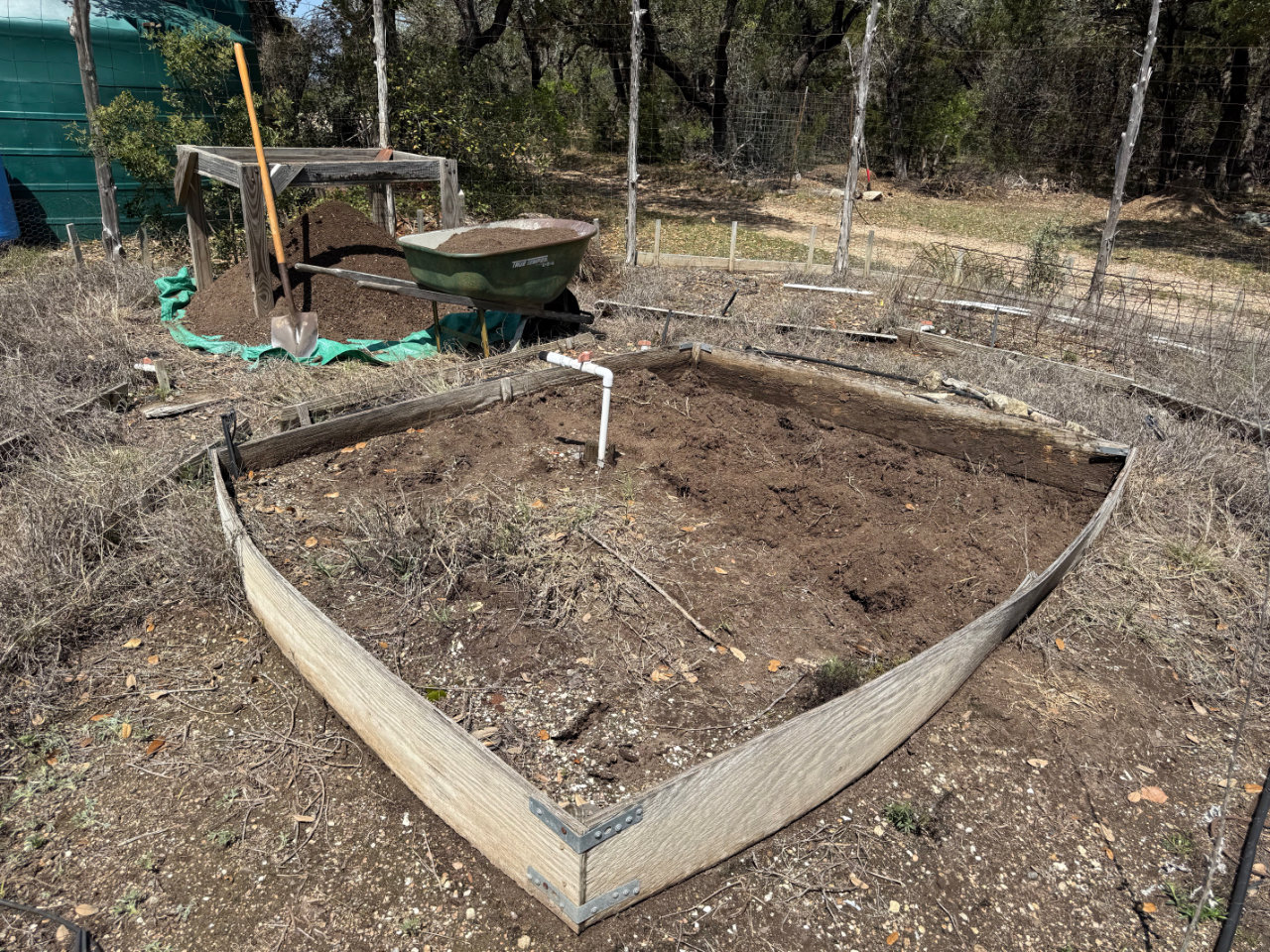
It was going to be hard work, but I determined to remove as much of the invasive grass and oak roots as possible. We’re strictly organic here, so chemicals were out of the question. That meant digging everything up and sifting each cubic foot of soil through a wire mesh sieve.
I started in late March of 2025 and worked at it steadily. As each portion of the garden was cleaned, we added compost (made with local garden waste, oak leaves and grass clippings), manure (from the neighbor’s horses), organic fertilizer and commercial, composted manure.
A little tiller goes a long way
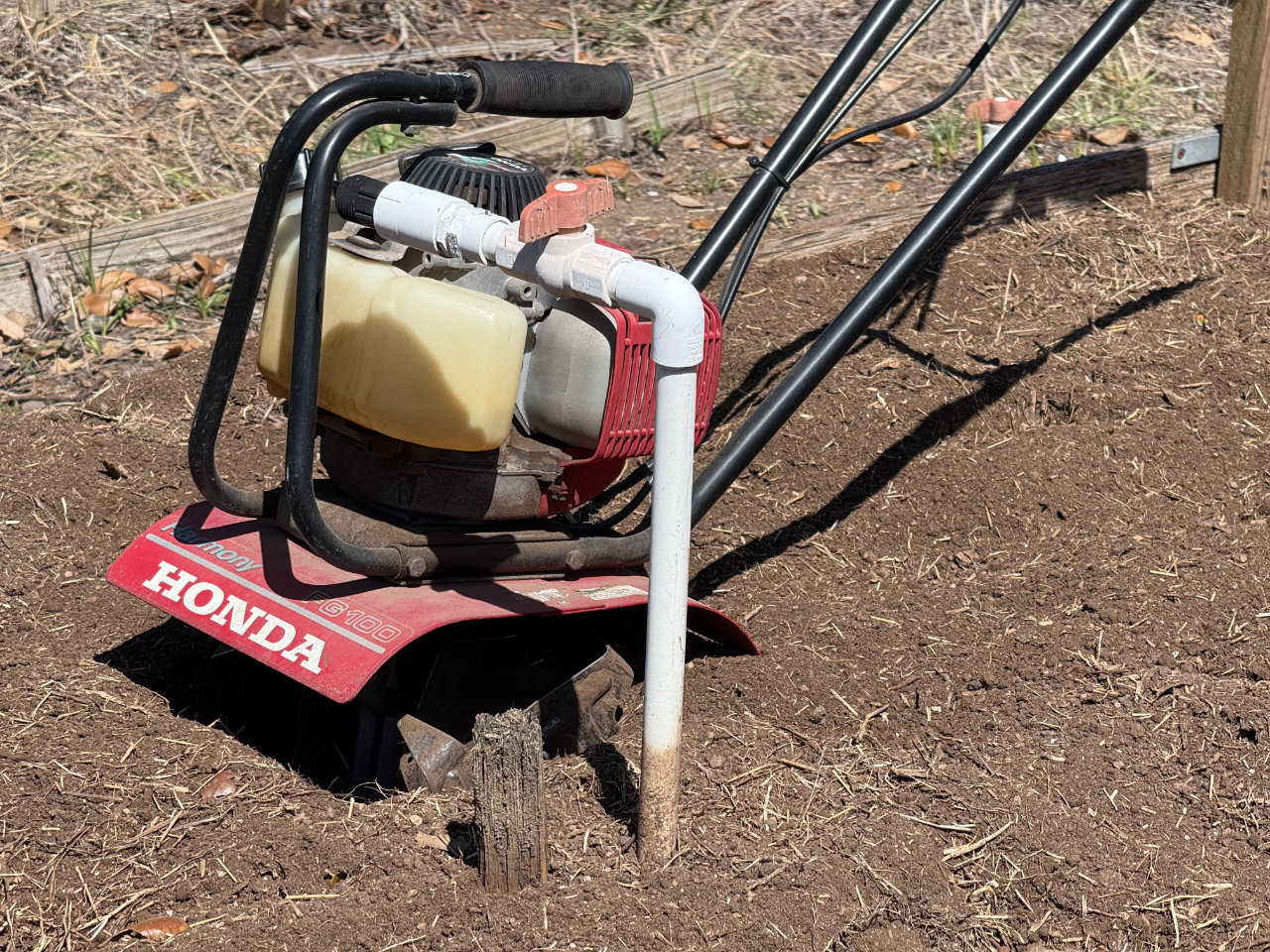
I’m only one person, and moving that much dirt with a shovel is hard work. Fortunately, I had a small tiller, purchased years ago. It hadn’t been run in so long I had to rebuild the carburetor and fuel system, but eventually I got it working. It really sped up incorporating the manure, compost and fertilizer I was adding.
I know the purists among you will frown on mechanical tilling and ruining the soil structure, but trust me — there wasn’t much structure left to destroy. Amazingly, we even found a few earth worms while digging everything up. I w,as careful to not disturb them too much. Maybe there was hope for success.
The Three Sisters
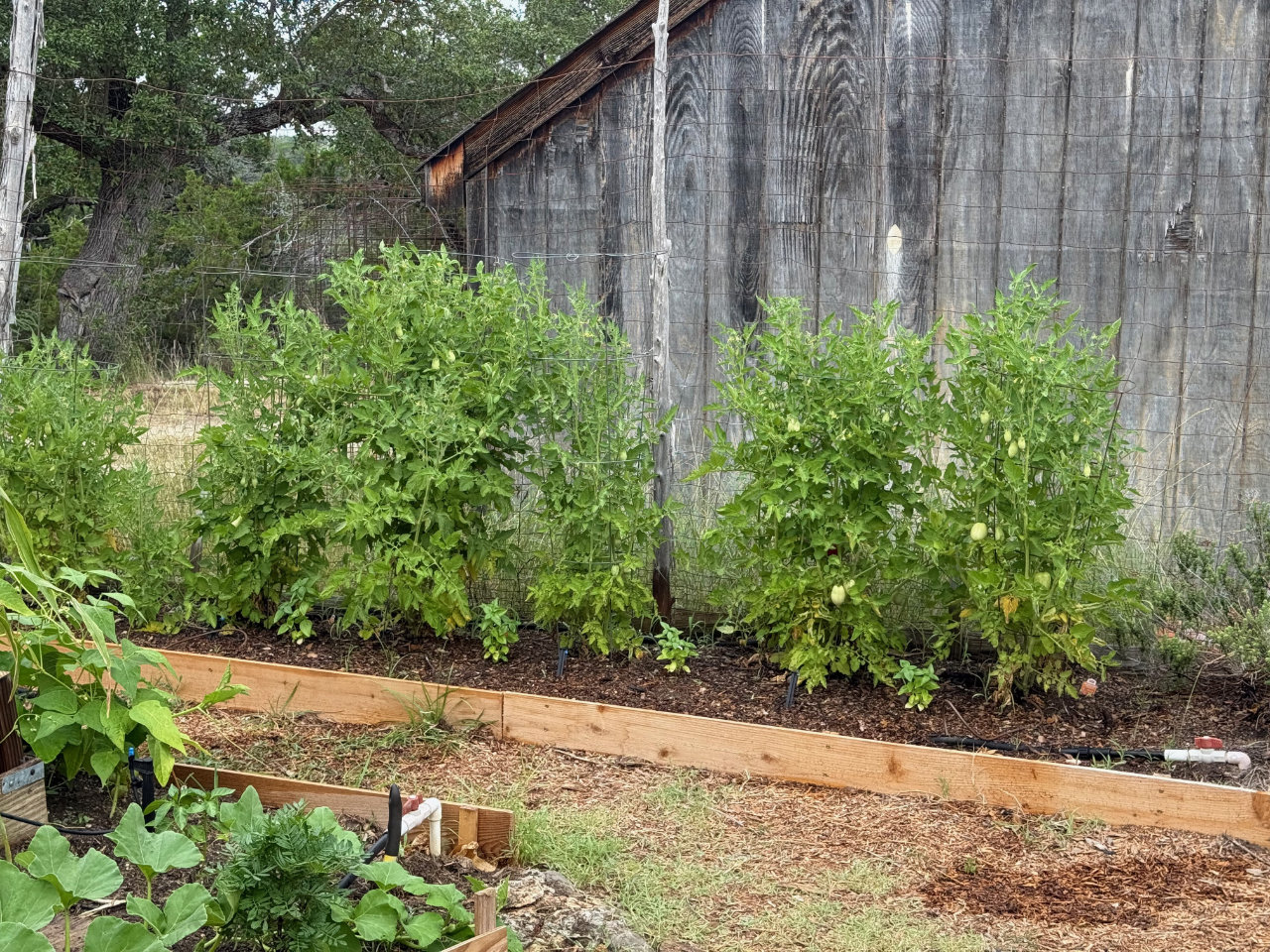
The first section to be planted, a tiered oval of earth in the center of the garden, was our attempt at the “Three Sisters.” I’ll say more about this in a future post, but it was very successful. San Marino tomatoes followed with other crops which I will also describe in future posts. Now, as I write this in September, I’m pretty happy with the result. The weather was more moderate this summer than in the past few, and we had beneficial rain in July and August — unusual for the Hill Country in more typical years..
Grape Jelly!
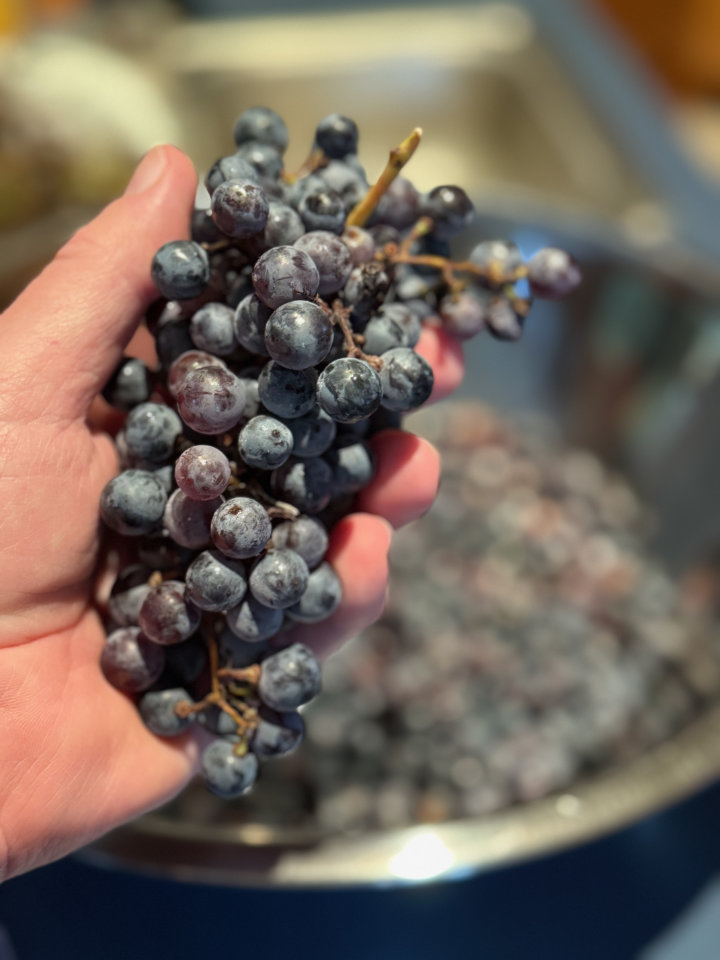
We even brought in a grape harvest. Years ago, I planted Catawba and Spanish Black grapes in an attempt to grow wine. I didn’t know much about it, and the area of grape plantings were no where near enough to support wine production. Then, the grapes always ripened when we were traveling to Red Power so the opportunistic birds got a big share of the produce. This year, we were on-site in June/July when the grapes were ripening and got enough to produce Wine Grape Jelly. I’ll say more about this in a future post, but suffice it to say it’s delicious.
Life Lessons
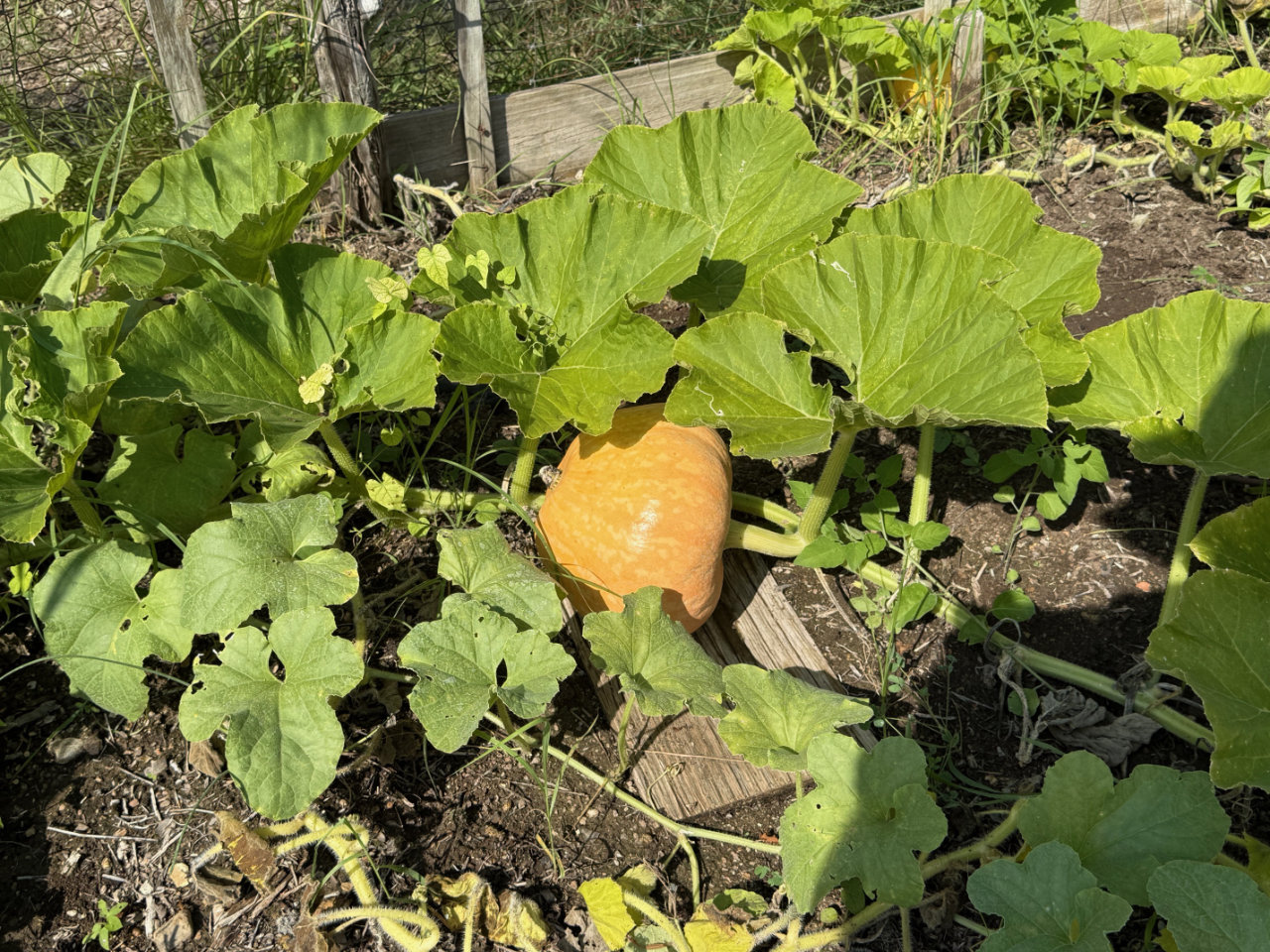
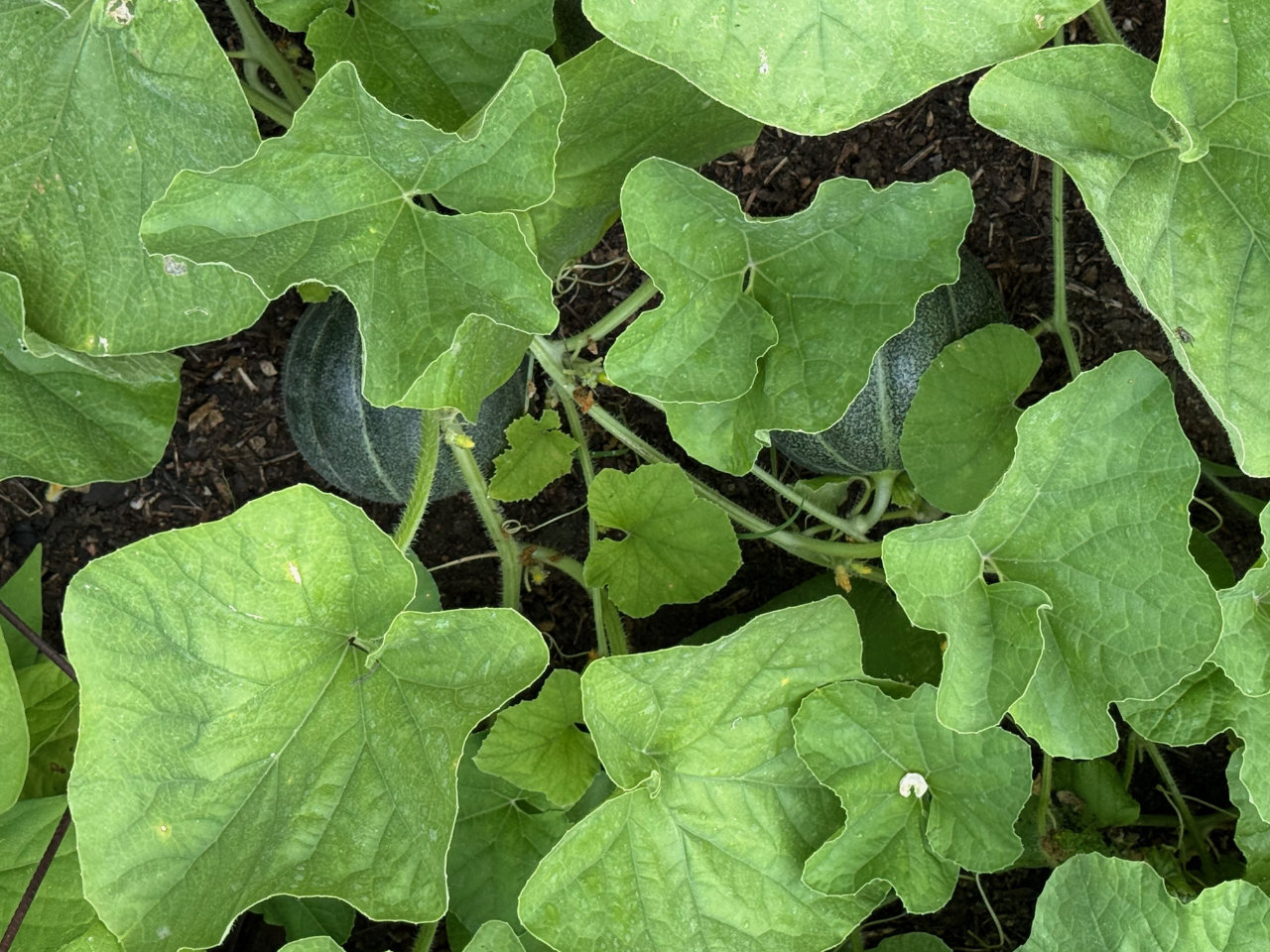
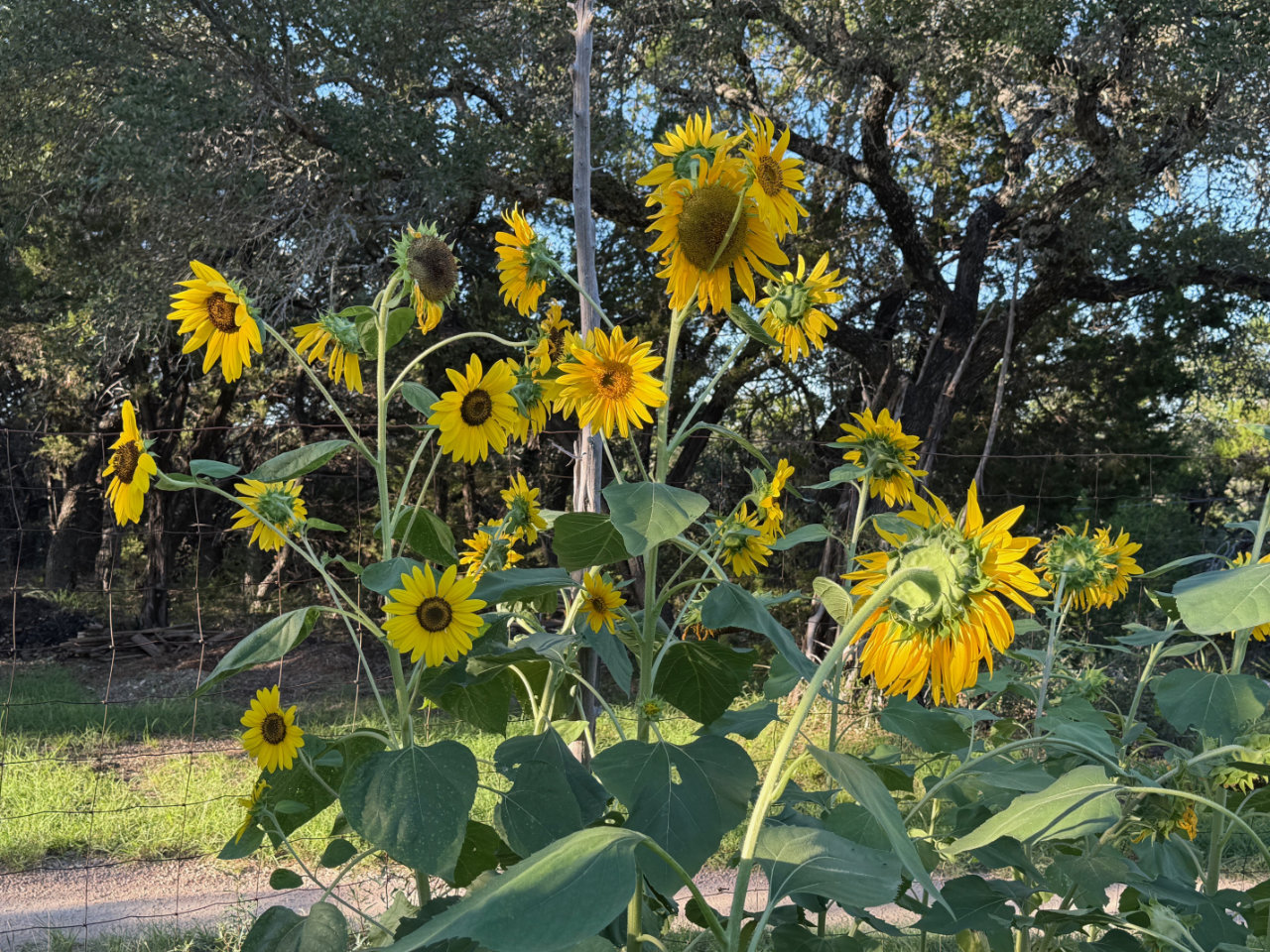
There are lessons in all of this. First of all, it’s never too late to begin gardening seriously. Second, slow and steady wins the race. I wasn’t able to renovate the entire garden in a week or two, but planting in succession as each section was finished worked well. As spring became summer, we were planting Sunflowers, Amish Pie Squash and Emerald Melons. We’re still enjoying the melons, and it looks like we’ll have punkins’ for Thanksgiving Pie.
I’m not a novice gardener, and all those years of gardening in the Hill Country have paid off. I finally realized that I know what will and won’t work. Wisdom. The biggest lesson of all is “whatever you can do, it is enough.” Reasonable goals and an acceptance of the results.
Worth It!
I’ll do it again next year. I’ve already begun the fall garden, which is starting with English Peas growing on the spent sunflower stalks. Waste not, Want not. I can feel the benefits of the physical labor — more personal energy. And let’s not forget the fundamental reasons for doing this: Home-grown produce simply tastes better. And, any step towards self-sufficiency and resilience feels great.
As we endured the hottest months of July and August, there was a steady stream of produce from our garden. Took me right back to my youth; “What’s for dinner tonight?” Well, let’s go see what’s in the garden . . .