Build a Great Virtual Pipe Organ
The Virtual Pipe Organ Project at Roy Creek Ranch
This page serves as the central hub for my long-term Virtual Pipe Organ project — documenting the evolution from childhood inspiration to modern digital instrument design.
Over the past several years, I’ve been building a custom virtual pipe organ that combines traditional console craftsmanship with modern digital audio, MIDI electronics, and microcontroller design.
What began as a salvage-and-move project gradually evolved into something more ambitious: a fully integrated instrument designed for musical expression, technical experimentation, and long-term refinement.
This project lives at the intersection of wood, wire, and waveform. It involves rebuilding a physical console, engineering reliable MIDI encoder systems for pedals and stops, integrating digital sound engines, and solving dozens of small design problems along the way.
What follows documents that journey — both the mechanical build and the electronic architecture behind it.
Virtual Pipe Organ Dreams
When I was little, I went to an Italian restaurant in Louisville, Colorado for dinner with my Dad. I must have been about 10 years old, and while I don’t remember much about the food, I certainly remember the restaurant because it had a Pipe Organ. The organ was behind glass windows on one side of the dining room, and Dick Hull, a famous organist of the era, played it while everyone enjoyed their meal.
A long and winding road . . .
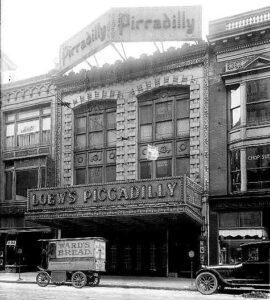
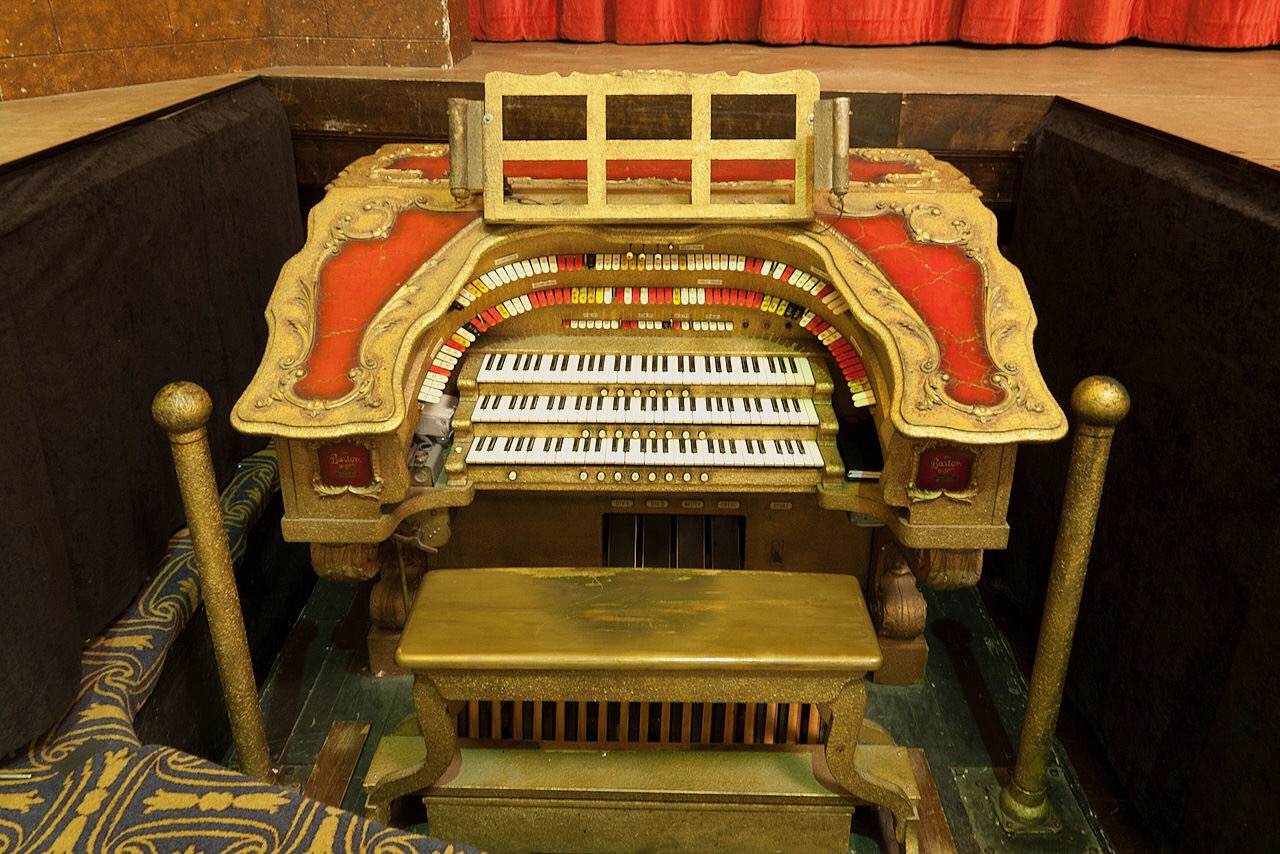
The restaurant, Three Coins in the Fountain (1963–1975), housed a Wurlitzer 3/13 theater organ originally built in 1927 for the Piccadilly Theater in Rochester, New York. It had three manuals and a rich palette of orchestral stops — Tibias, Diapasons, Vox Humana, and theatrical percussions that filled the room with sound.
That evening planted something that never quite went away.
Decades later — after careers, houses, ranch projects, and solar builds — I found myself returning to that sound. Not by acquiring a 1927 Wurlitzer, but by asking a different question:
Could I build a virtual instrument that captures the musical depth of a theater organ while using modern digital tools?
Modern Technology Opens the Door to a Virtual Pipe Organ
Fast forward 40 years, and I learned of Bob Heil through my interest in Amateur Radio. He was hosting a podcast on the This Week in Tech (TWIT) network called Hamnation, and mentioned his early career as a theater organist. Intrigued, I looked a little further on the ‘net, and found a couple of vids of him playing. All the magic of my 10-year-old experience came flooding back — only this time, it didn’t seem quite so far fetched. Maybe I could buy such an organ.
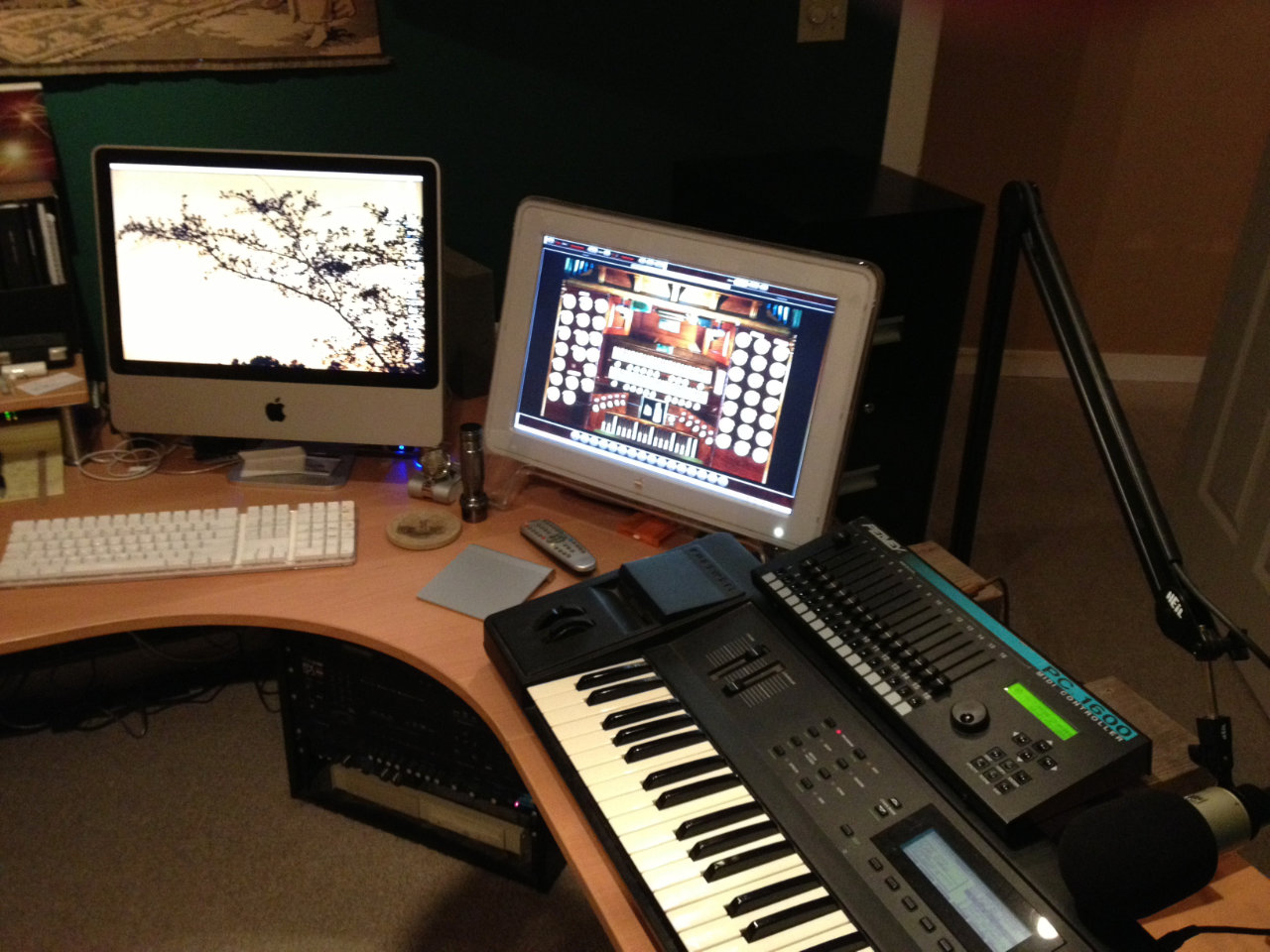
Bob had an Allen organ in his home, and I quickly discovered that it was a major investment. But I also learned of the Virtual Pipe Organ idea, with Hauptwerk software center stage. Before long, I had purchased the software and incorporated it into my MIDI studio. I could see a full-on organ was not only possible, but way more capable than I had ever imagined. I began to make plans.
The project began with an old organ
Hauptwerk is essentially a custom sampler that plays back giant sample sets of famous pipe organs. It ran well on my iMac, and I could do a lot with a couple of MIDI keyboards, but I really needed a set of pedals to have a real organ.
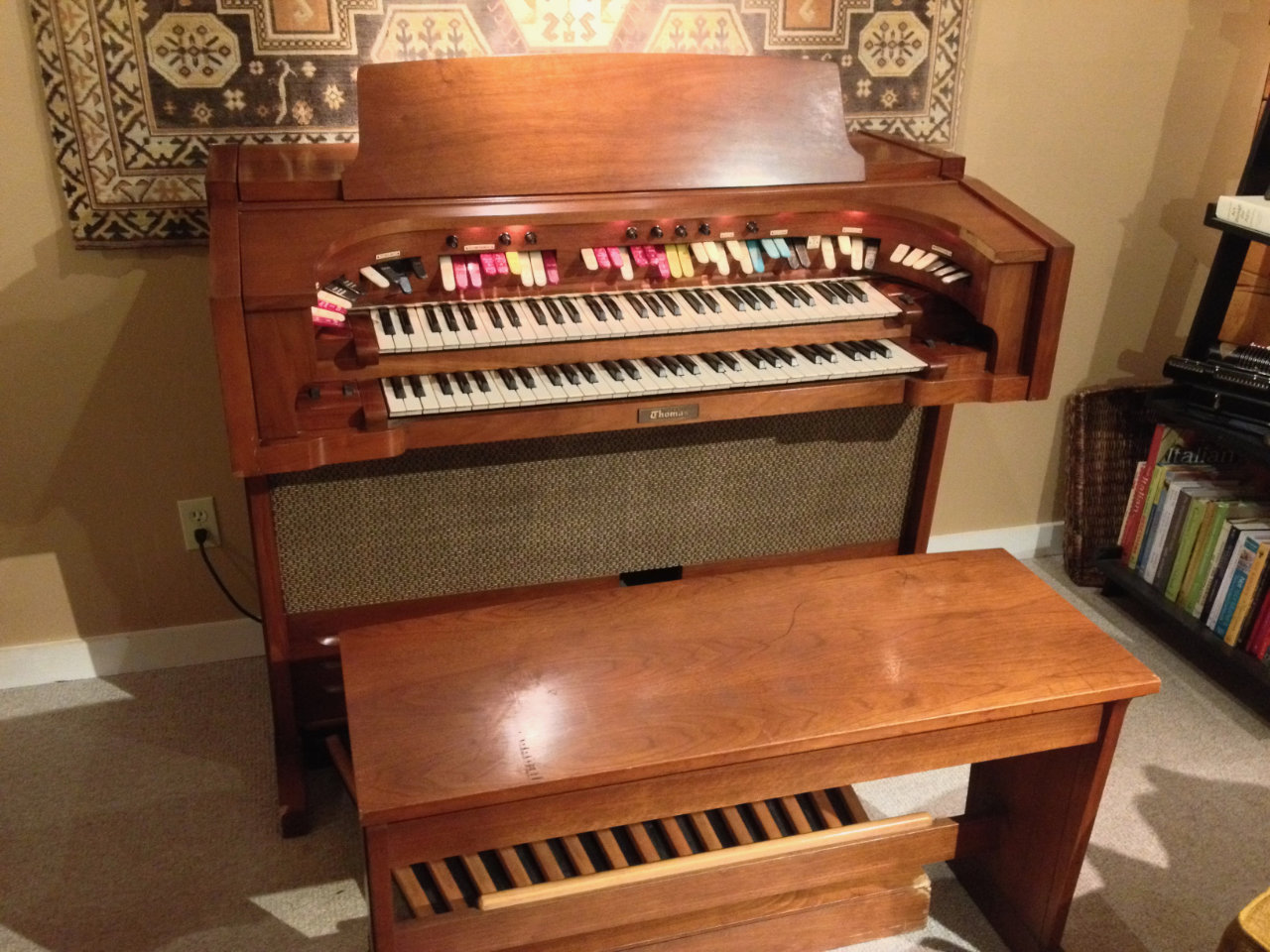
I then started looking around for old, used organs and found a candidate in Kyle, Texas for about $100. It was a Thomas Transistor Organ, Model “O.” I bought it and hauled it home with the help of a friend, and began to evaluate its prospects.
It had a nice case with a “horseshoe” shaped set of stops with two 61-note keyboards. It was also equipped with a two-octave set of European-style pedals and a single swell shoe. It was mostly working, but the keyboards were pretty worn. Some notes didn’t work and one key had been broken and poorly repaired. There was a little hum in the tube amplifiers, but it also had a working Leslie speaker system.
We’ll need some pedals
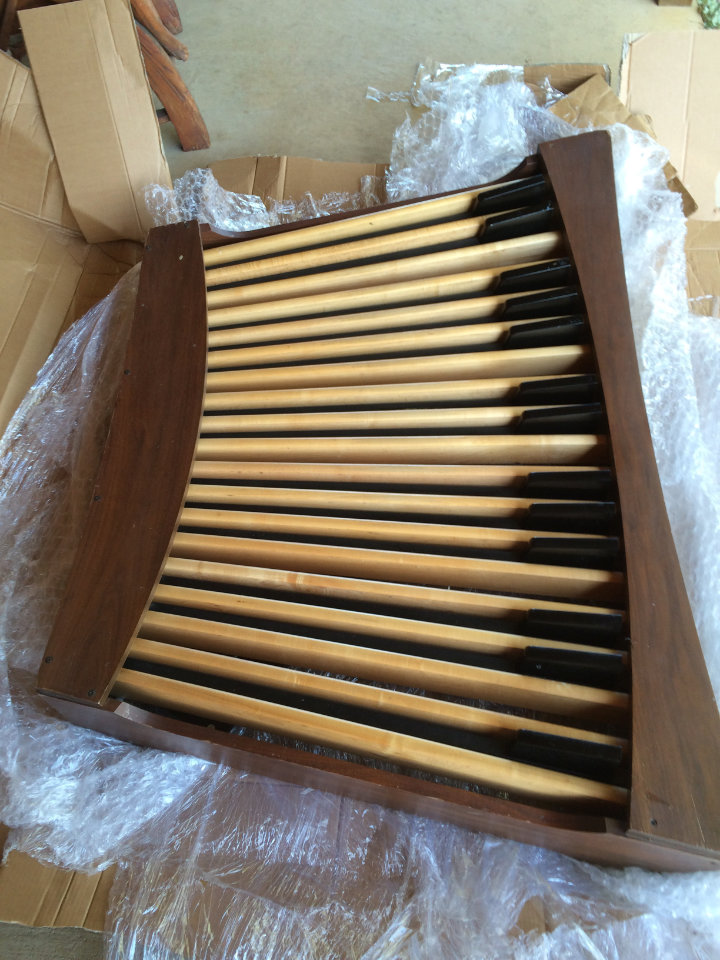
About the same time, I found a listing for a full-size set of American Guild of Organists (AGO) compliant pedals. I ended up buying them even though they had to be shipped via a custom freight firm from California. I now had an organ console with many re-usable components, and a pedal set. Cool.
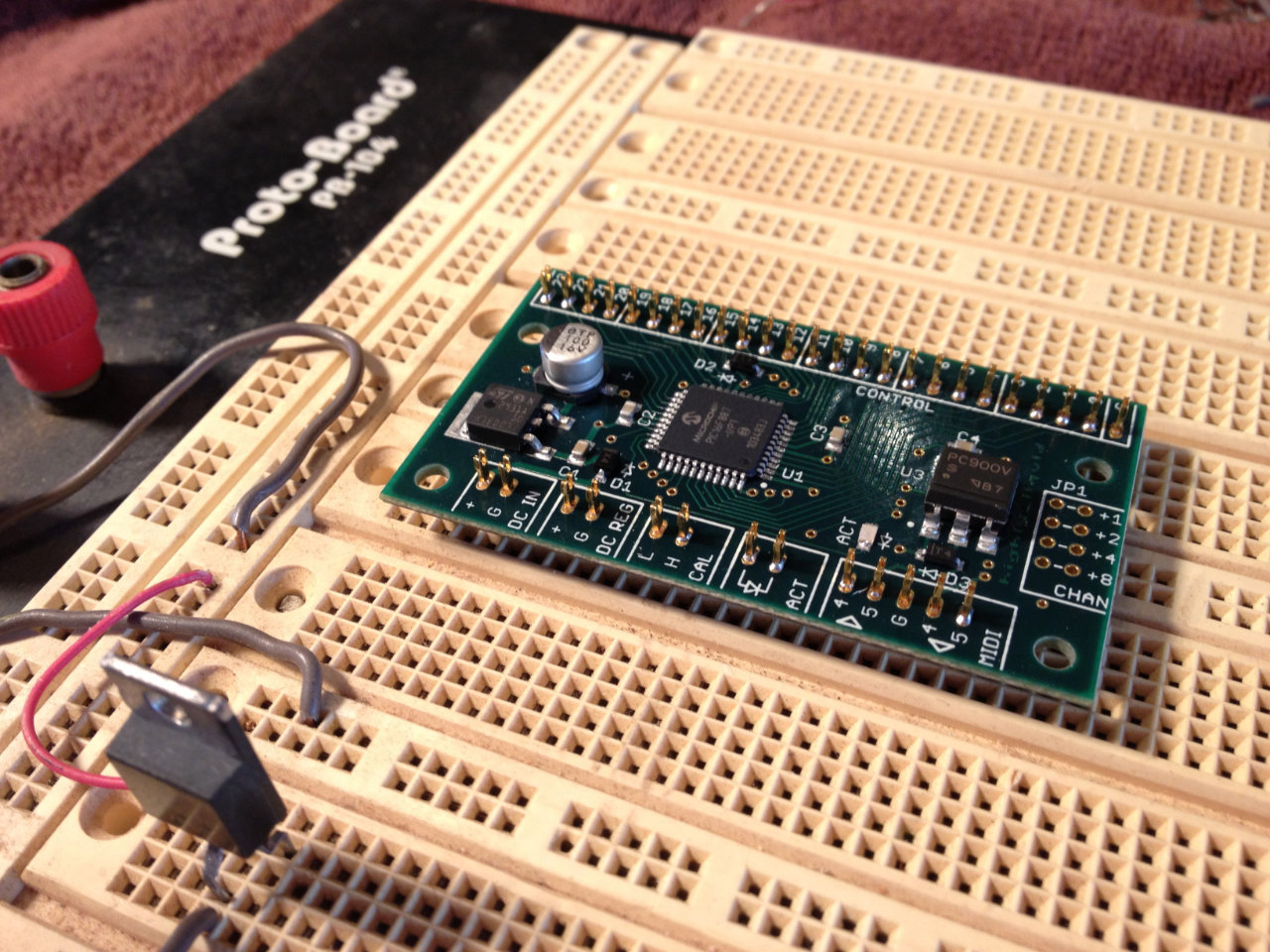
Of course, the pedal set was made for an older organ, and didn’t generate MIDI. Instead each pedal has a magnet on the end closest to the organ. The magnets move near a series of reed switches, one for each pedal. When a pedal is pressed, it comes close to a reed switch, which closes a circuit. All I needed was to encode each separate switch closure into a MIDI message with an encoder board. I bought one and had it mocked up and running in short order.
The first plan –
The original plan was to restore the Thomas Transistor organ to its original function and add MIDI functionality to play the Hauptwerk organ software. After that, I would substitute the AGO pedals for the original European set.
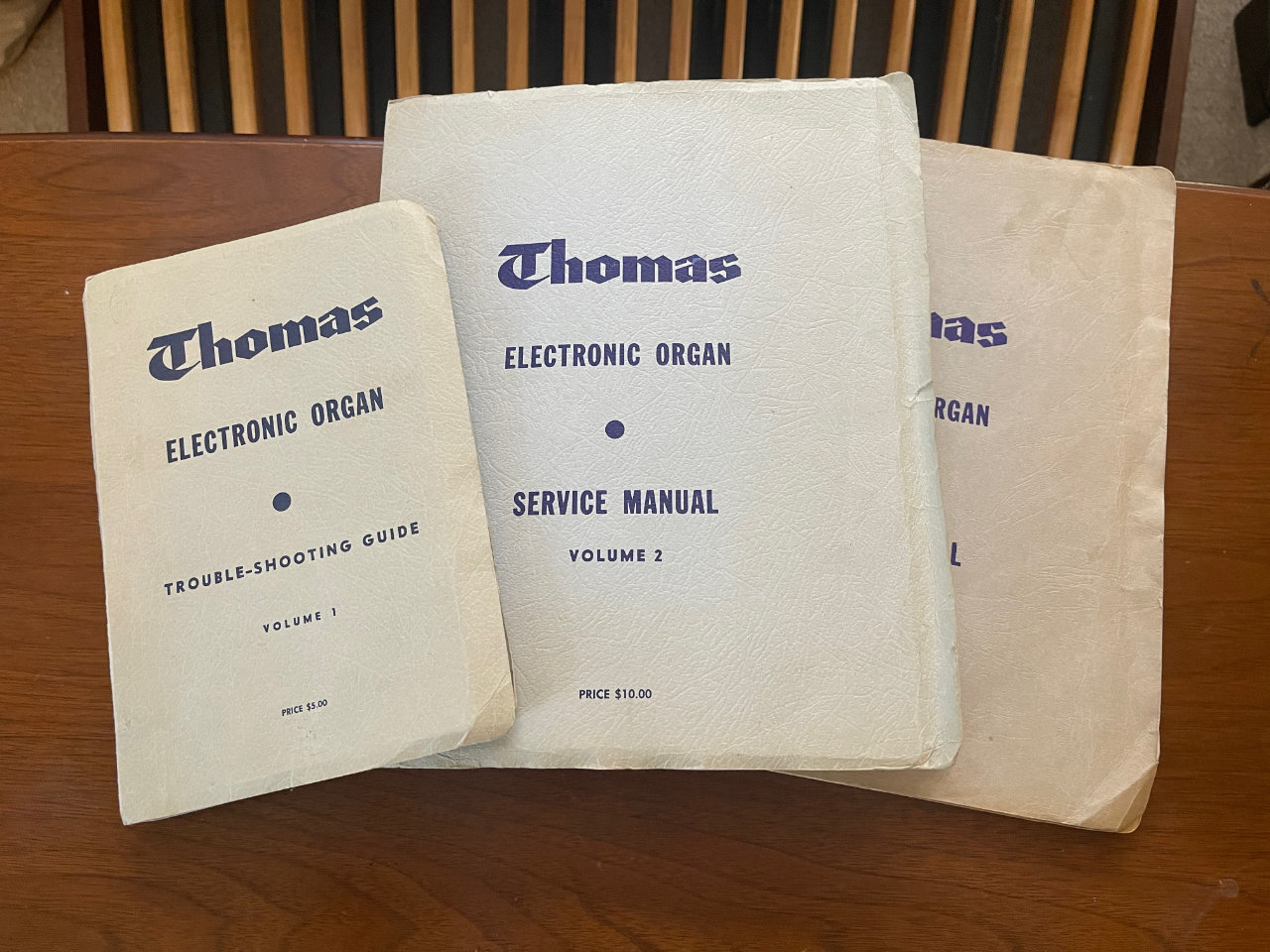
The organ had come with a complete set of service manuals, and several hours of work on the organ got it mostly working. It was limited though. The early 1960’s transistor circuitry produced so-so imitations of the pipe organ sounds I wanted, and the keyboard mechanisms were very complex, making a conversion to MIDI impractical. I began to lose interest.
And that’s where we are today, several years later. But the virtual pipe organ project is alive again. With a nudge from another project, I finally realized the most valuable part of the old organ was the cabinet, the tube amps, instrument and Leslie speakers. The stops are also useful. The original keyboards and sound generator 
A new plan to build a Virtual Pipe Organ
So here’s the new, revised plan. I will remove the old keyboards. That will leave space for two, new 61-note MIDI keyboard controllers. Keyboards after all, are a standard size, and should fit the original space. The old sound generator and other circuitry that isn’t immediately useful for the Hauptwerk conversion and will also be removed. That will leave space to accommodate the MIDI and audio interfaces needed to connect the computer running Hauptwerk software to the console and sound system.
Because the AGO pedals are taller and have a much larger footprint than the originals, I will adjust the height of the console and pedals so they mate properly. Depending on available space and keyboard geometry, I may attach a third MIDI keyboard below the other two.
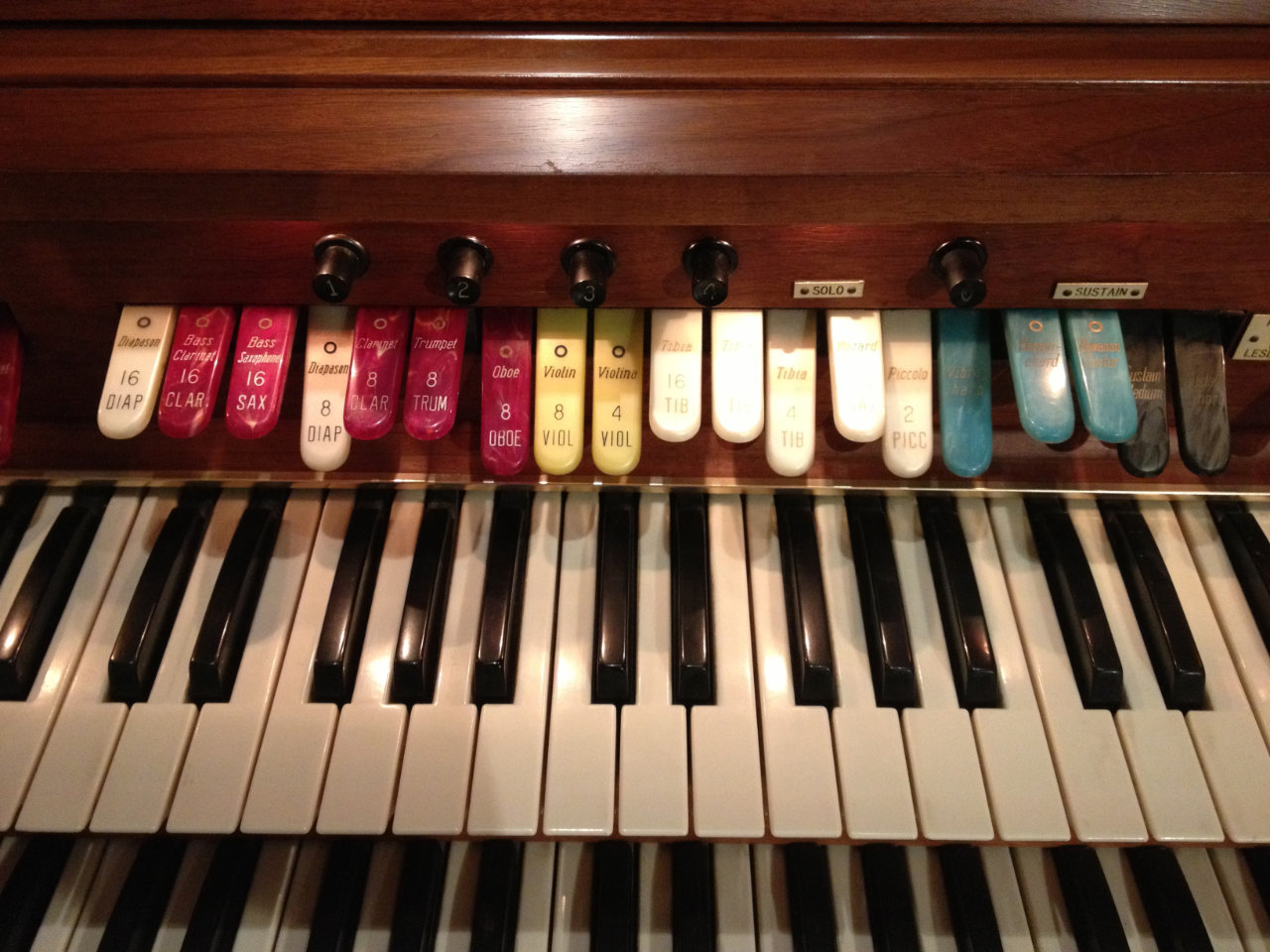
A MIDI encoder will be added to the original stops. Along with the AGO pedals and new keyboards, all will generate MIDI messages that can be mapped into Hauptwerk. The generated sound will play through the original tube amps and Leslie speaker system as well as additional outputs for other speaker locations. I may also try to generate the original Thomas sounds using Surge or Phase Plant synthesizer software. In short, I will have a restored Thomas Transistor organ with upgraded keyboards, pedals and complete MIDI outputs. Of course, the console will be able to control almost any sound that can be electronically generated. A performer’s dream.
Watch this space as we embark on this musical/historical/technology adventure. These posts are to document the work for my own reference as well as show how old, obsolete instruments can function in the modern world.
This project is organized into several major components:
The Core Build
→ Link to: A Great Virtual Pipe Organ
Brief description:
- Salvage
- Console reconstruction
- Overall concept
Console & Mechanical Work
→ Link to: Console Modifications
Short description:
- Disassembly
- Structural modifications
- Physical layout changes
MIDI & Electronics Engineering
→ Link to: MIDI Encoders for Pedals and Stops
Short description:
- Custom encoder boards
- Stop tab scanning
- Pedal input systems
- Microcontroller integration
Virtual Pipe Organ Project Series
This article is part of the Virtual Pipe Organ Project at Roy Creek Ranch.